The Kiln Cannot Be Hurried
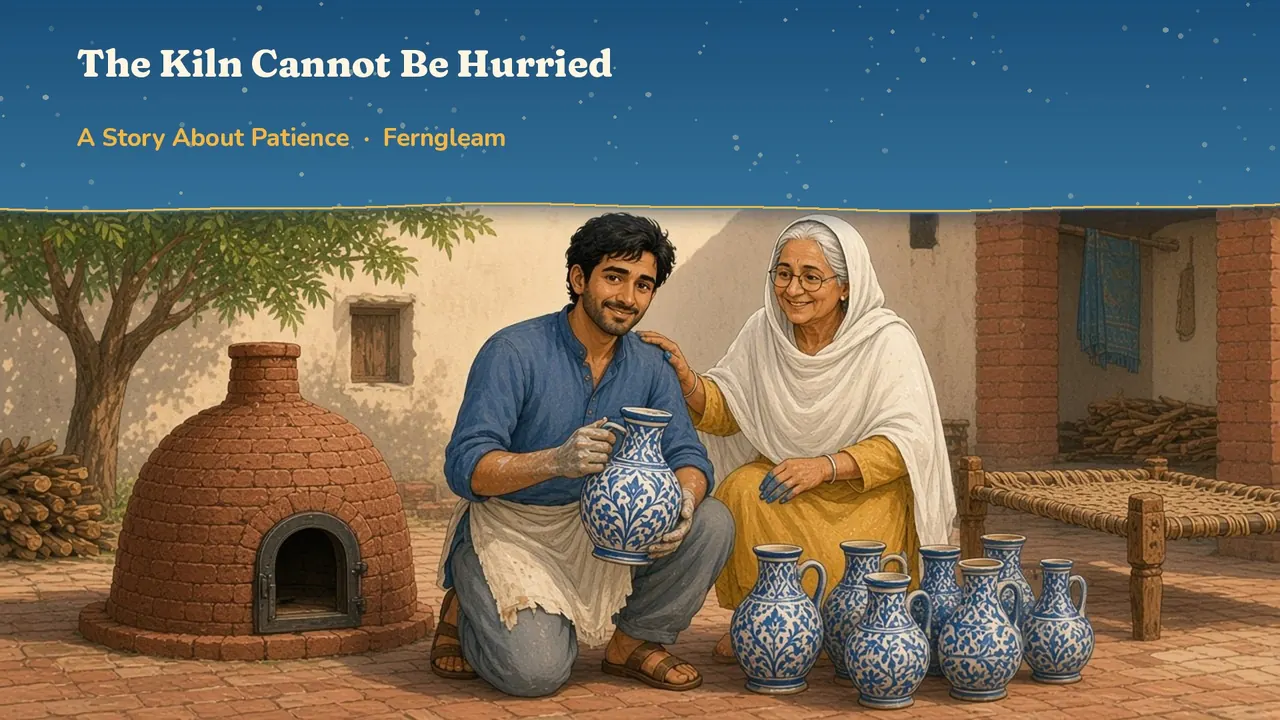
The Kiln Cannot Be Hurried
A Story About Patience
Ferngleam · First free edition, October 2026
This book is free. You are welcome to download, read, print and share it, unchanged and free of charge. Please don’t sell it.
The story text, the illustrations and the audio narration were made with AI tools, then edited and checked for this edition. The Islamic lesson quotes English translations of the meaning of the Qur’an (Sahih International) and a hadith (Sunnah.com); the sources are named in that section.
Read by a computer voice: Piper text-to-speech, “Cori” voice (en_GB-cori-high) by Bryce Beattie, public domain.
Before You Read
This is a story about Hamid, a young potter who learns that some things cannot be rushed.
Notice when he chooses hurry, and when he chooses patience.
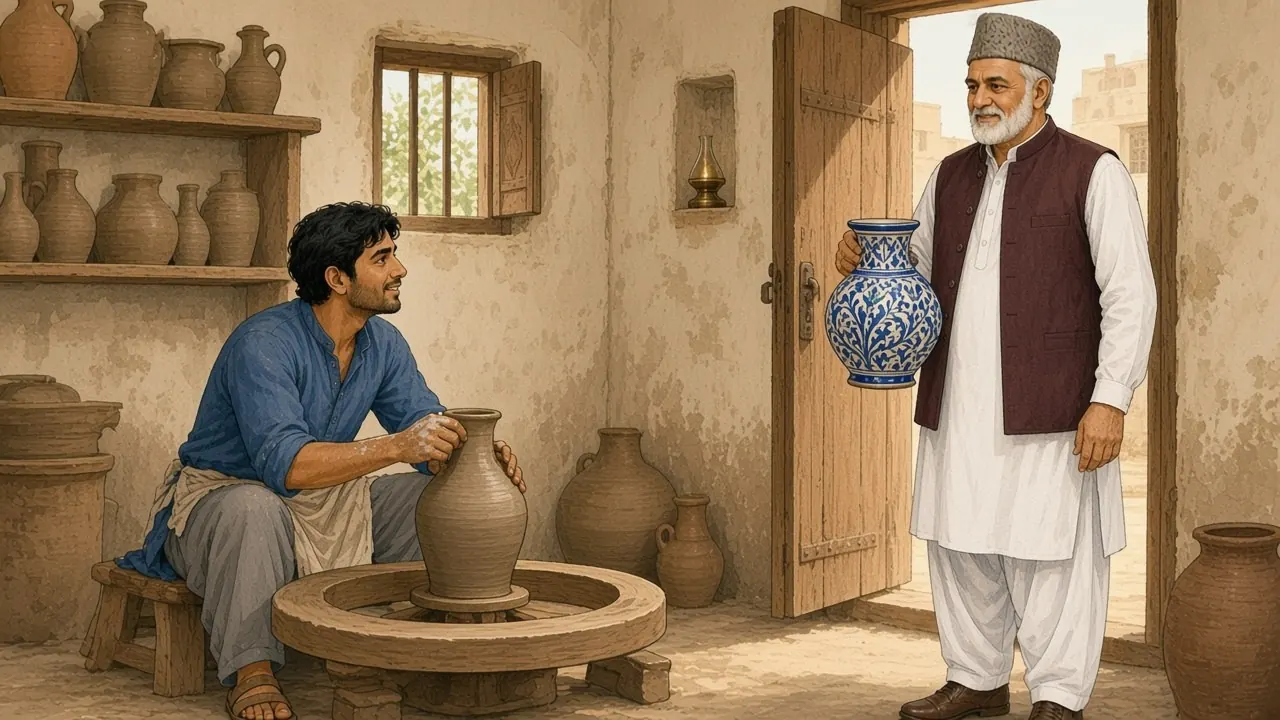
Hamid’s late father left him a potter’s wheel, an old brick kiln and a quiet shop in a narrow Multan lane.
When Iqbal Sahib ordered forty blue water jugs for his daughter’s wedding, in six days, Hamid said yes too quickly.
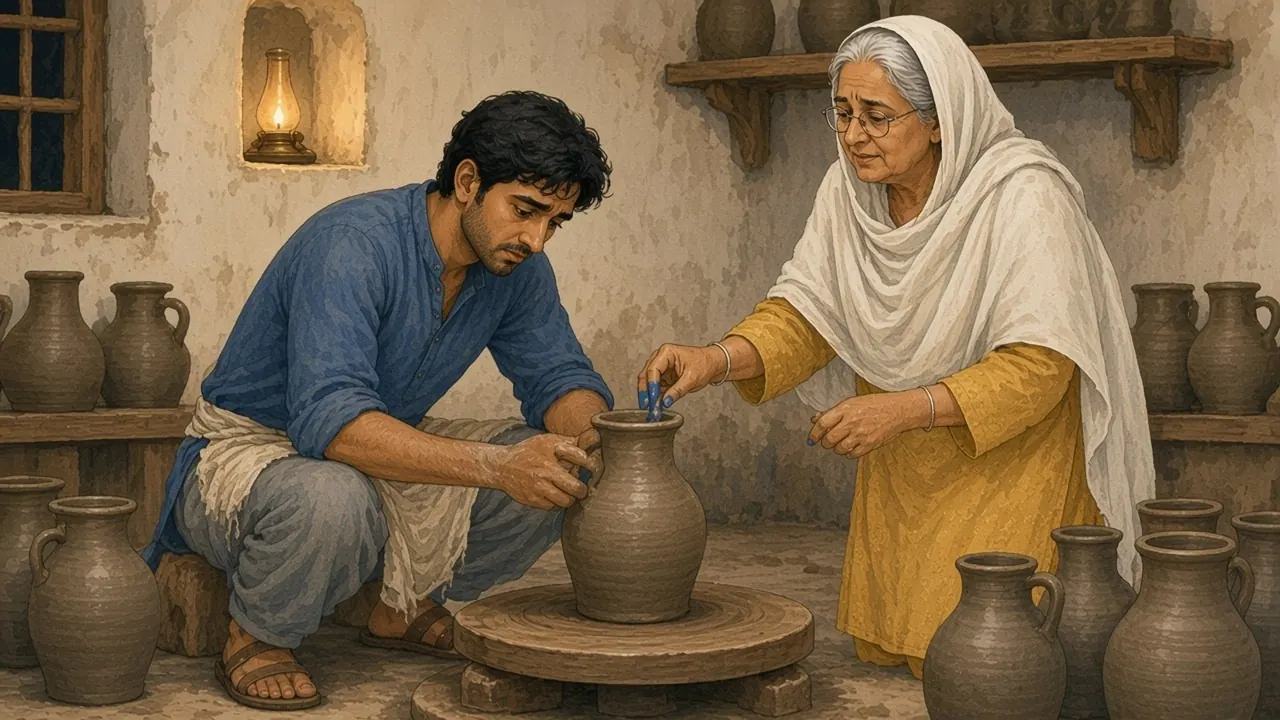
He worked at the wheel from dawn till midnight.
Khala Bano, his father’s old painter, frowned. “The clay is still wet, beta. Let it dry.” “There’s no time,” said Hamid.
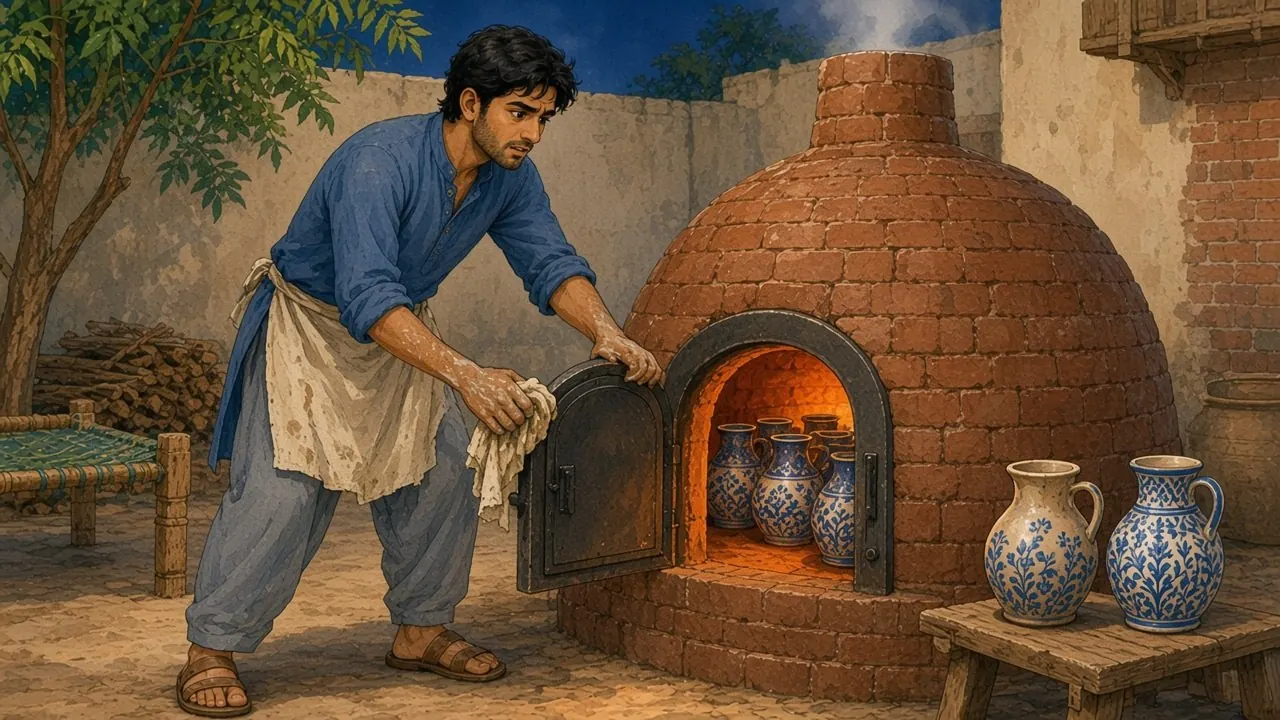
He painted blue flowers on damp clay and fired the kiln too early.
On the fourth night, too impatient to let it cool, he pulled the door open.
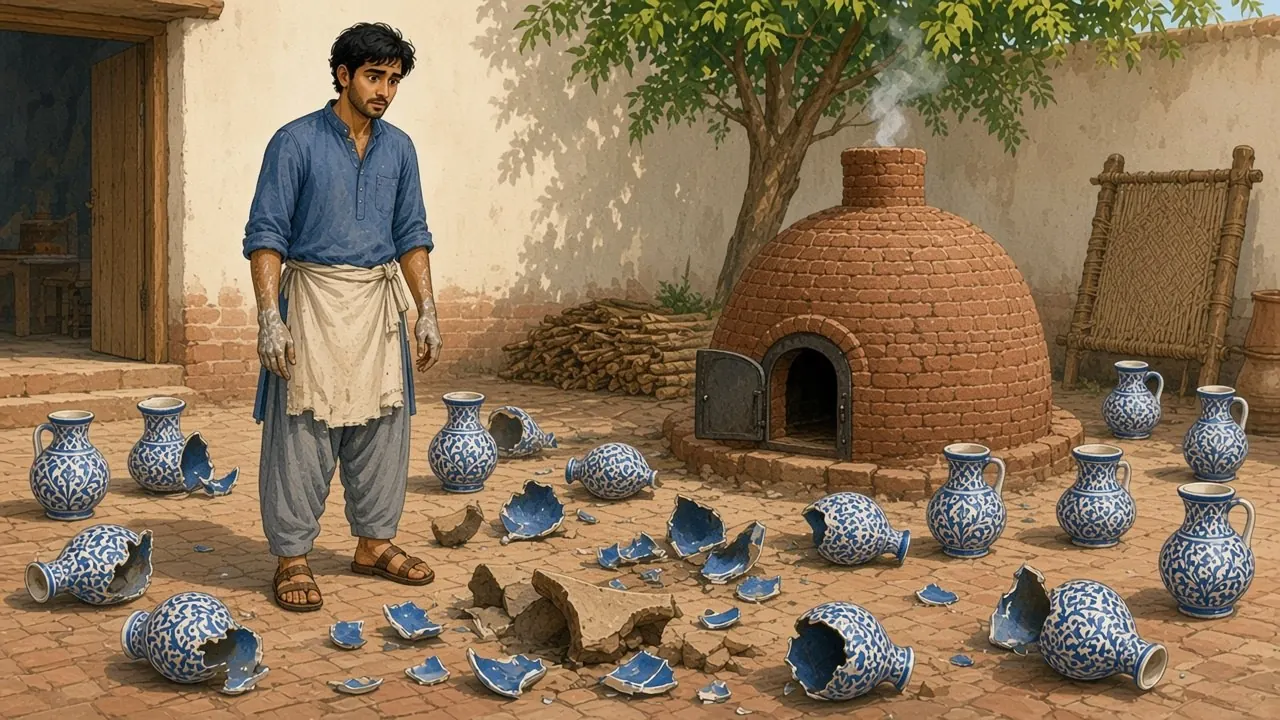
Cold air rushed in. One by one, the jugs split with a sound like breaking ice.
By morning, nearly all forty lay cracked on the bricks.
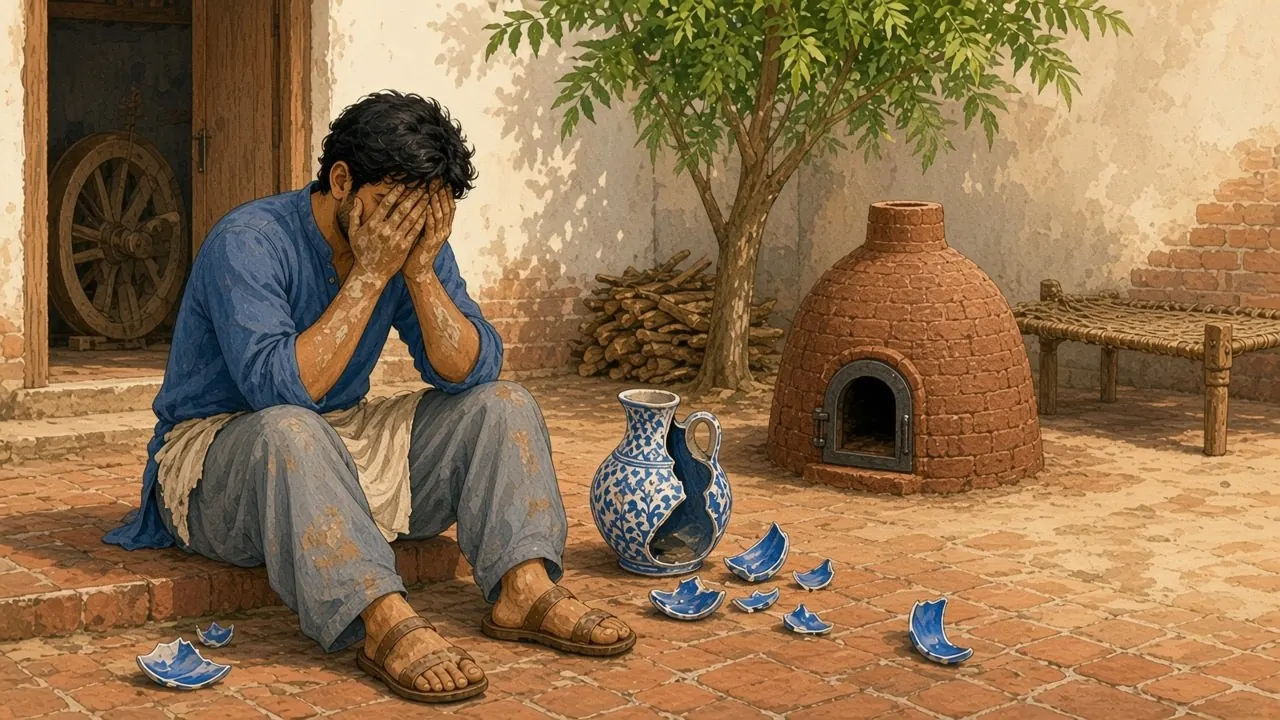
Hamid kicked a shard across the yard and shouted at the kiln, the clay, his father’s silent wheel.
Then he sat down on the step and covered his face.
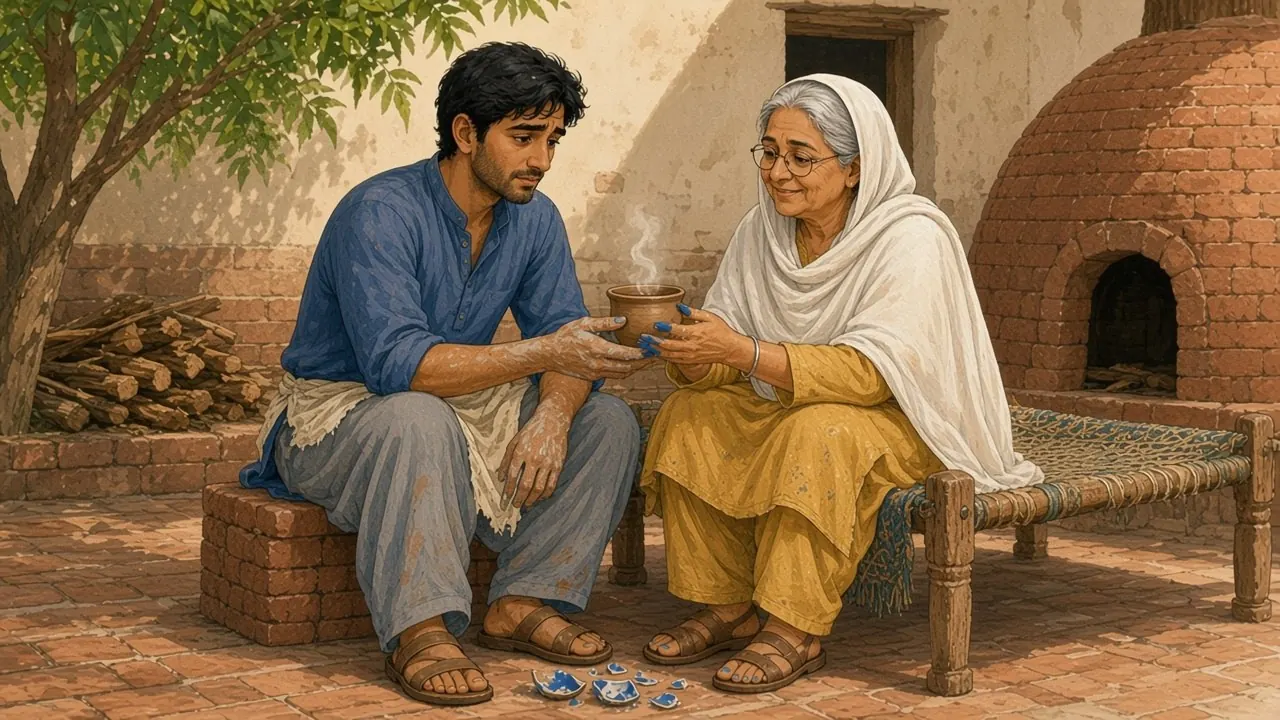
Khala Bano put a cup of tea in his hands. “Your father broke a hundred jugs before he learned,” she said.
“Real patience is at the first blow, beta. Not after.”
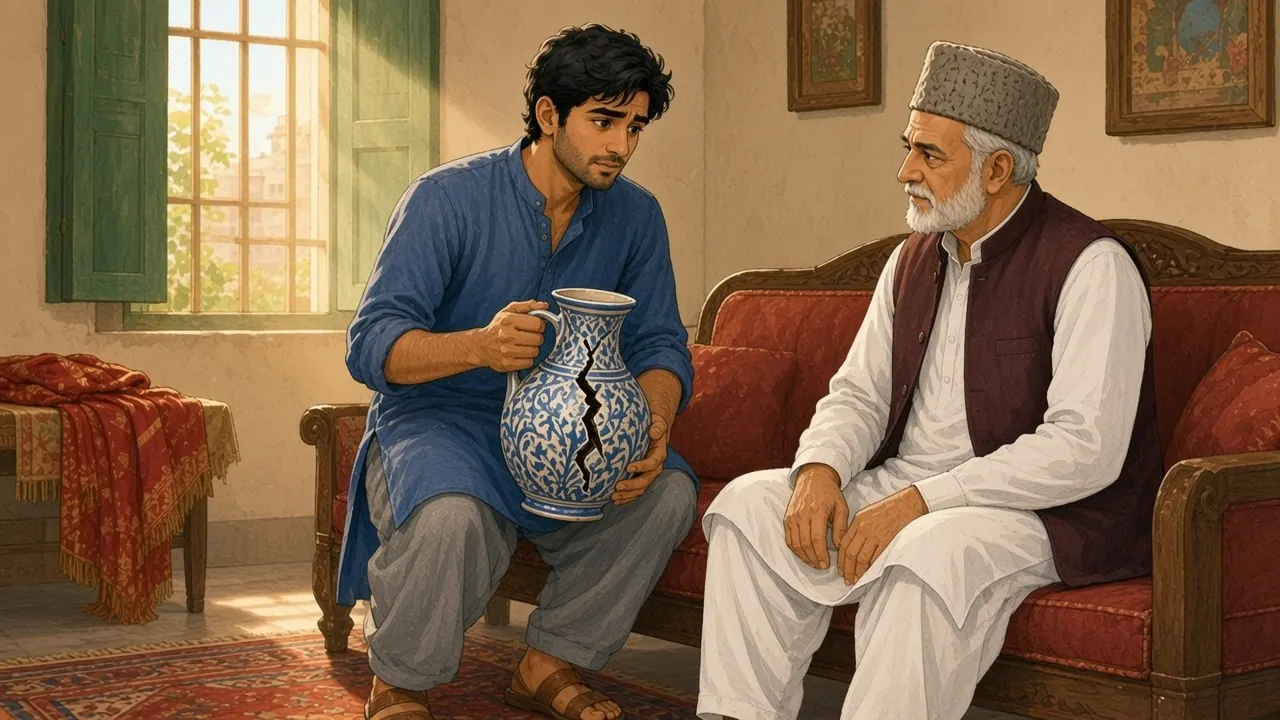
That afternoon, hands shaking, Hamid went to Iqbal Sahib.
He told him everything: the hurry, the cracks, and that good jugs need time.
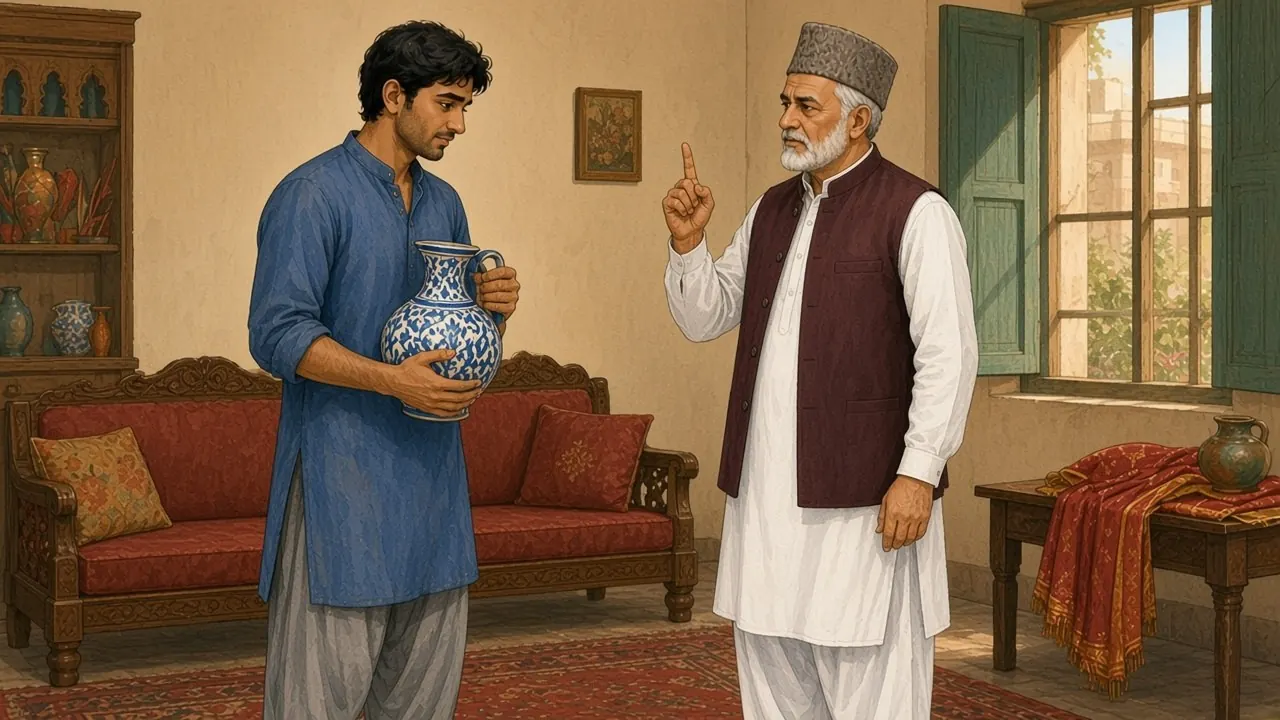
Iqbal Sahib was quiet for a long time. “I trusted you,” he said at last.
“The barat is in nine days. Bring them by then, or don’t bring them at all.”
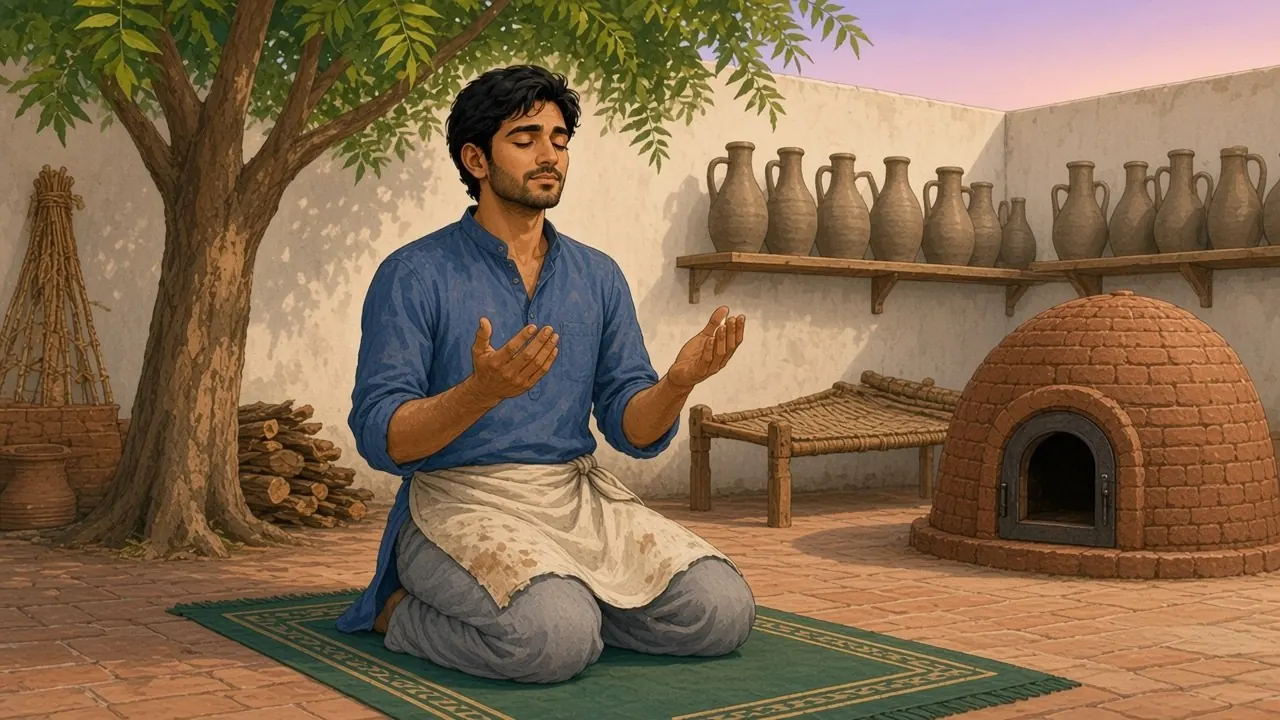
This time Hamid let every jug dry slowly in the shade.
Waiting was harder than working. After Fajr he asked Allah for patience, and his breathing grew steady.
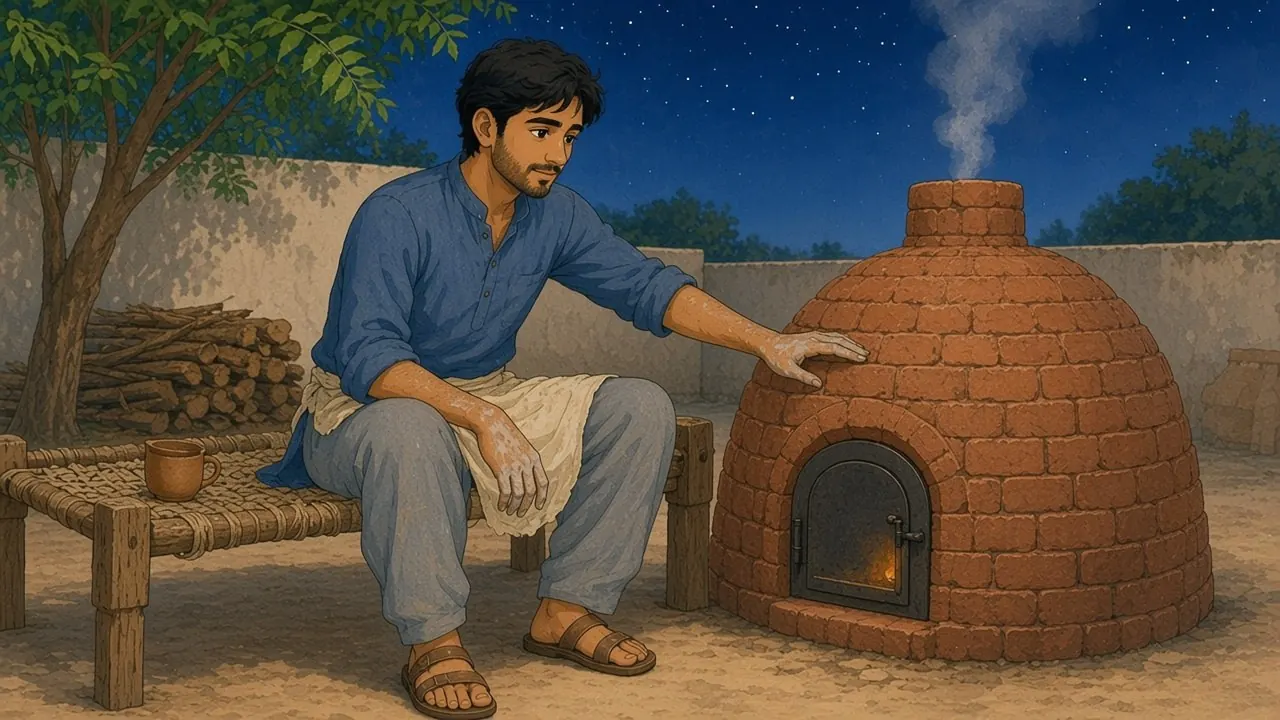
He fired the kiln, then did the hardest work of all: nothing.
For a day and a night he sat by the warm bricks and kept the door shut.
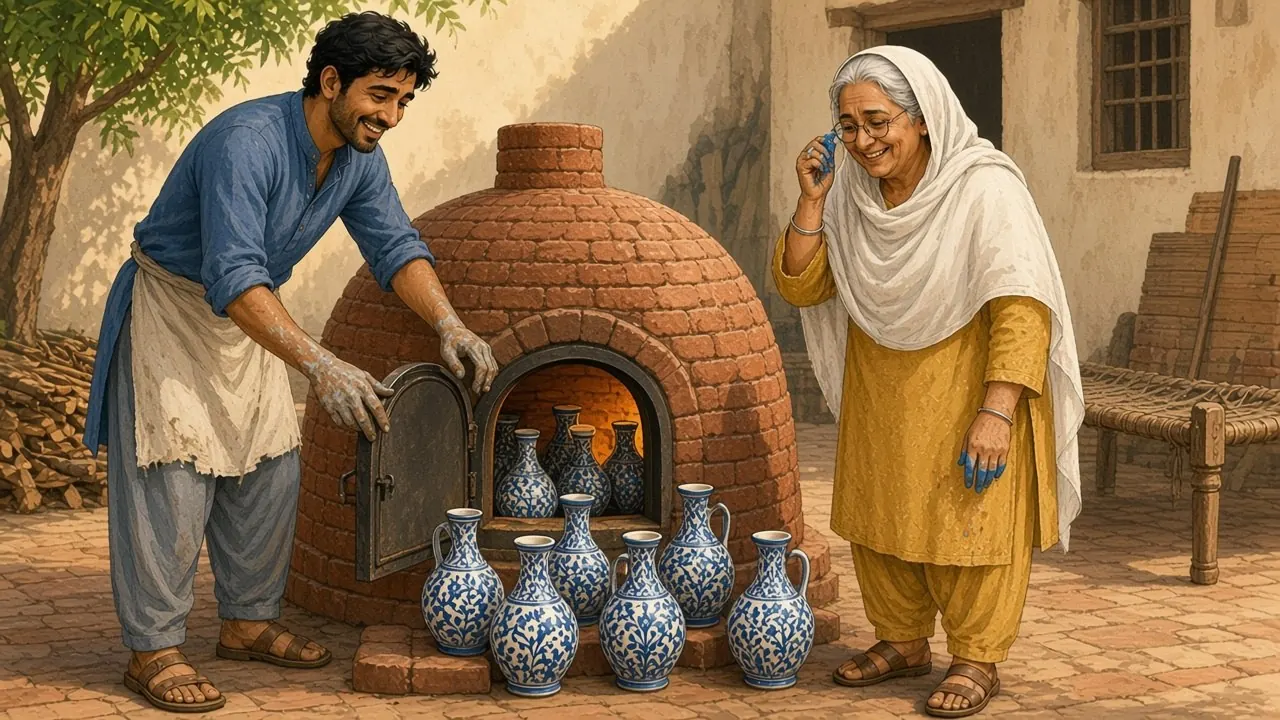
At dawn, Hamid and Khala Bano opened the kiln.
Forty jugs stood whole and shining, blue as the evening sky. Khala Bano wiped her eyes.
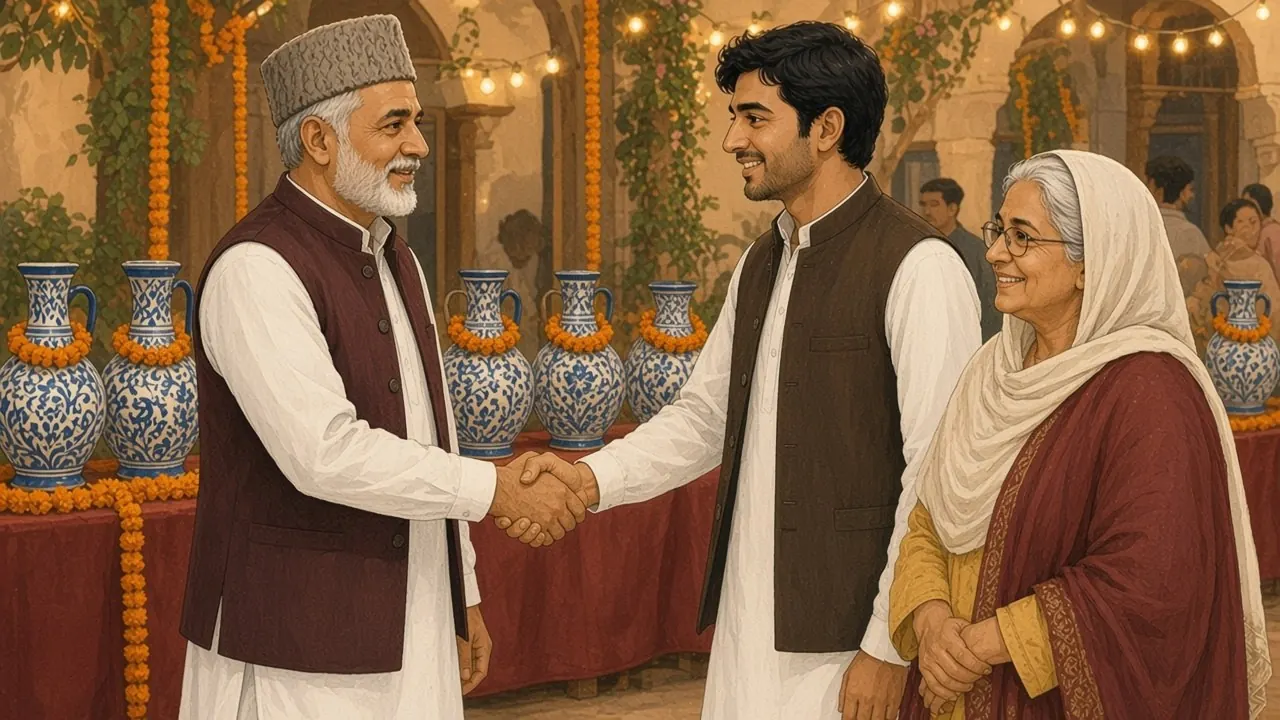
At the wedding, the jugs stood in a long row, garlanded with marigolds.
Iqbal Sahib shook Hamid’s hand. “Worth the wait,” he said.
The Lesson
Hurry can break the very thing we are trying to make. Patience means staying calm when things go wrong and giving good work the time it needs.
An Islamic lesson: Allah says in the Qur’an: “Seek help through patience and prayer. Indeed, Allah is with the patient.” (Surah Al-Baqarah 2:153, Sahih International)
The Prophet Muhammad (peace be upon him) said: “The real patience is at the first stroke of a calamity.” (Sahih al-Bukhari 1302; also Sahih Muslim 926)
Good things take the time they take; patience at the first blow keeps us from breaking them.
Questions to Think About
Why did Hamid say yes to six days?
What did Khala Bano mean by “patience is at the first blow”?
Where in your life are you tempted to open the kiln too early?
Conclusion
Today one cracked jug sits on Hamid’s shelf. When customers ask him to hurry, he points to it and smiles.
“The kiln cannot be hurried,” he says, “and neither can anything good.”
The End
Turn the page with the buttons, the ← → arrow keys, or by swiping.
Download it free
- Download PDFPDF picture book · 1.2 MB
- Download EPUBEPUB ebook · 1.1 MB
- Download MP3MP3 audio narration · 1.3 MB
Free to download, read, print and share. No sign-up.
Listen
Jump to a part
- 0:00 Title
- 0:08 Before You Read
- 0:20 Story, part 1
- 0:36 Story, part 2
- 0:51 Story, part 3
- 1:02 Story, part 4
- 1:14 Story, part 5
- 1:25 Story, part 6
- 1:39 Story, part 7
- 1:51 Story, part 8
- 2:03 Story, part 9
- 2:14 Story, part 10
- 2:24 Story, part 11
- 2:37 Story, part 12
- 2:48 The Lesson
- 3:20 Questions to Think About
- 3:34 Conclusion
The whole book, 3 min 51 s, read by a computer voice, not a human narrator.
About the story
Hamid’s late father left him a potter’s wheel, an old brick kiln and a quiet shop in a narrow Multan lane. When Iqbal Sahib orders forty blue water jugs for his daughter’s wedding, in six days, Hamid says yes too quickly. He paints on damp clay, opens the kiln before it cools, and by morning nearly every jug lies cracked.
Good things take the time they take; patience at the first blow keeps us from breaking them.
Book details and how it was made
- Formats
- PDF picture book (29 pages), EPUB ebook, MP3 audio narration (3:51)
- Language
- English
- Story and text
- Story drafted with AI writing tools, then edited by hand.
- Illustrations
- All illustrations made with an AI image tool.
- Narration
- The narration is read by a computer voice (Piper text-to-speech, “Cori” en_GB-cori-high by Bryce Beattie, public domain), not a human narrator.
We disclose AI use on every book.