Paratha Again!
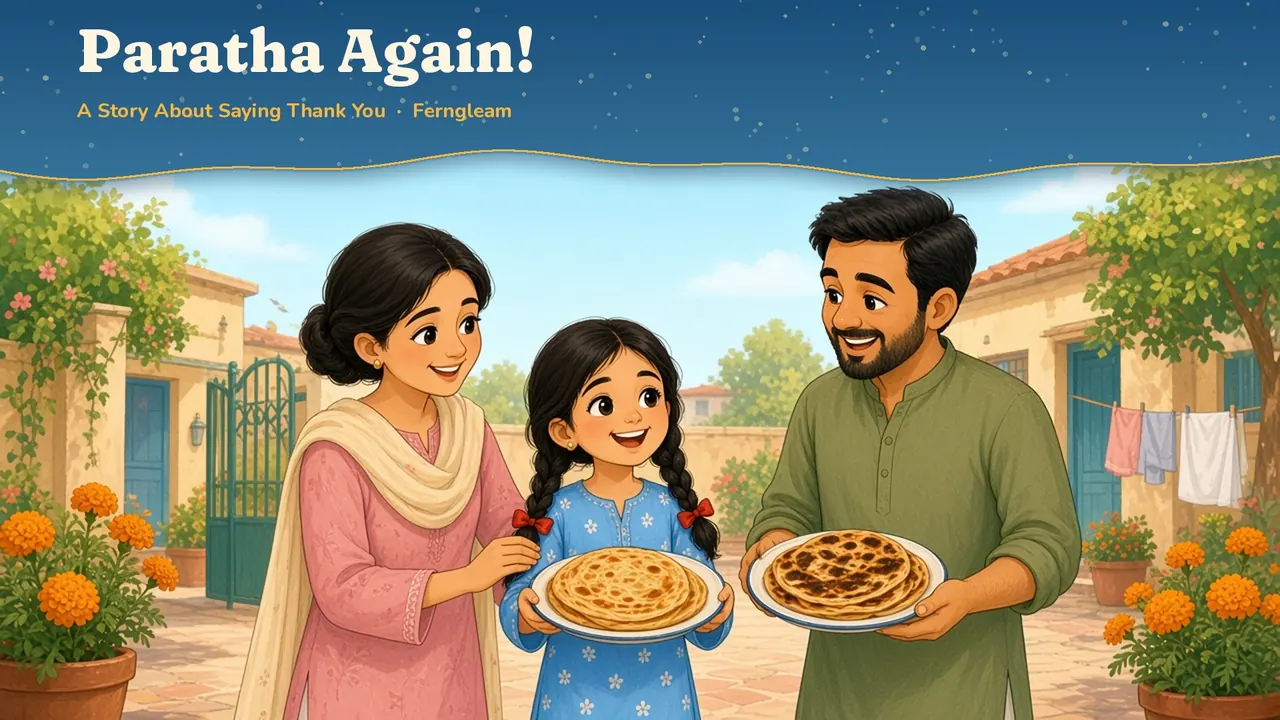
Paratha Again!
A Story About Saying Thank You
Ferngleam · First free edition, October 2026
This book is free. You are welcome to download, read, print and share it, unchanged and free of charge. Please don’t sell it.
The story text, the illustrations and the audio narration were made with AI tools, then edited and checked for this edition. The Islamic lesson quotes English translations of the meaning of the Qur’an (Sahih International) and a hadith (Sunnah.com); the sources are named in that section.
Read by a computer voice: Piper text-to-speech, “Cori” voice (en_GB-cori-high) by Bryce Beattie, public domain.
Before You Read
This is a story about Sana, who grumbled about almost everything, until one surprising Sunday.
As you read, look for the little things Ammi does every day.
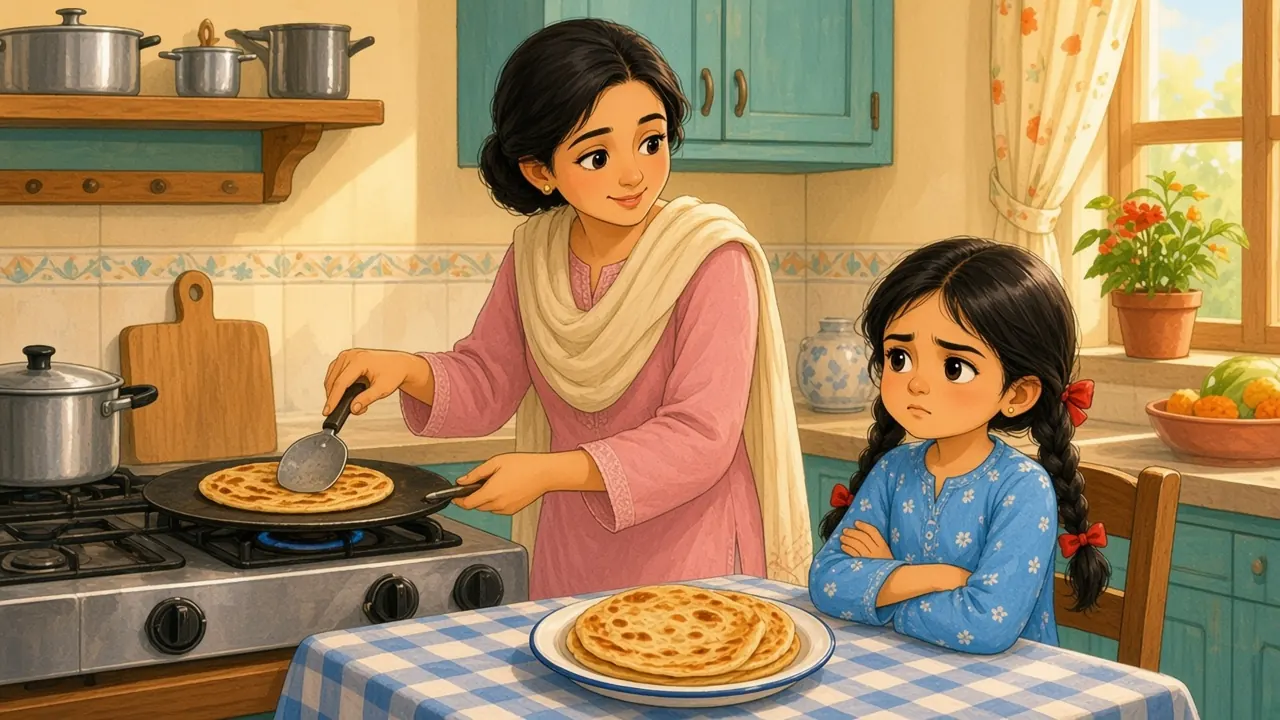
Every morning, Ammi made soft, round parathas.
And every morning, Sana grumbled. “Paratha again? Mahnoor gets jam sandwiches!”
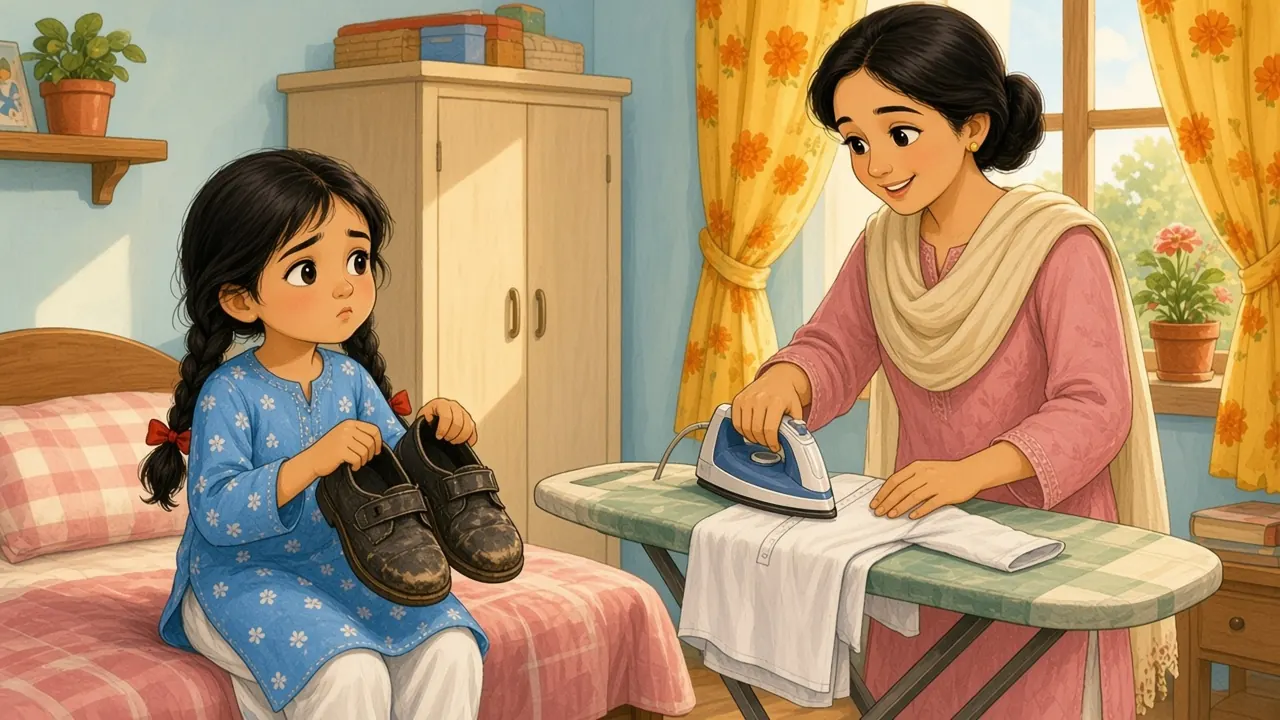
Later, Ammi ironed Sana’s school uniform.
“My shoes are so old,” Sana grumbled. “Mahnoor has shiny new ones.” Ammi just smiled.
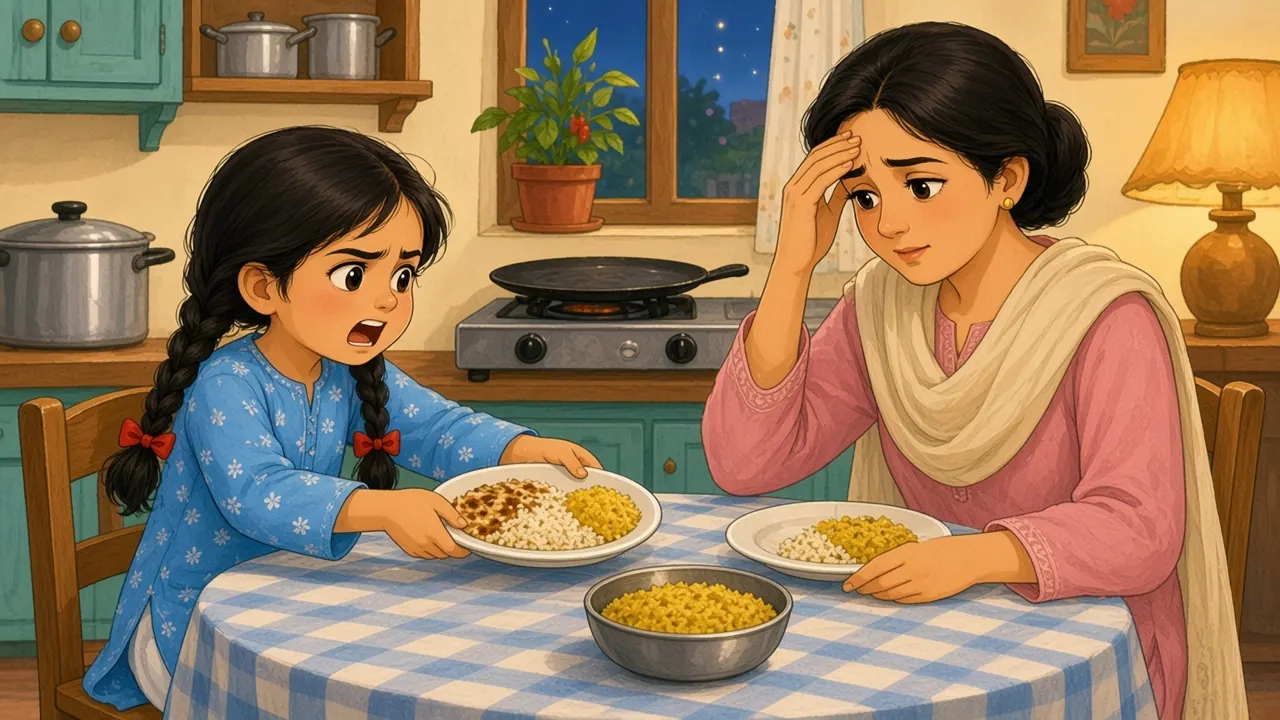
At dinner, Sana pushed her plate away. “Daal again!”
Ammi rubbed her forehead. She looked very tired.
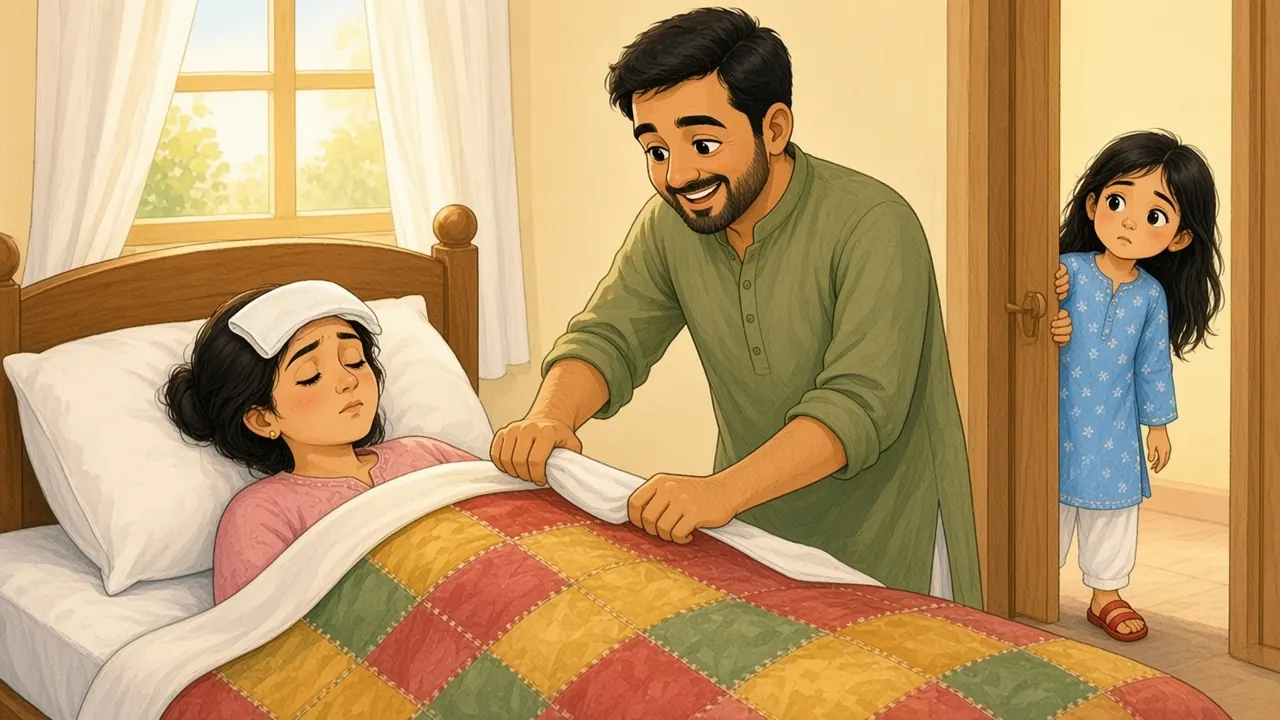
On Sunday morning, Ammi stayed in bed with a fever.
“Ammi must rest today,” said Abbu, tucking the quilt around her. “We will manage!”
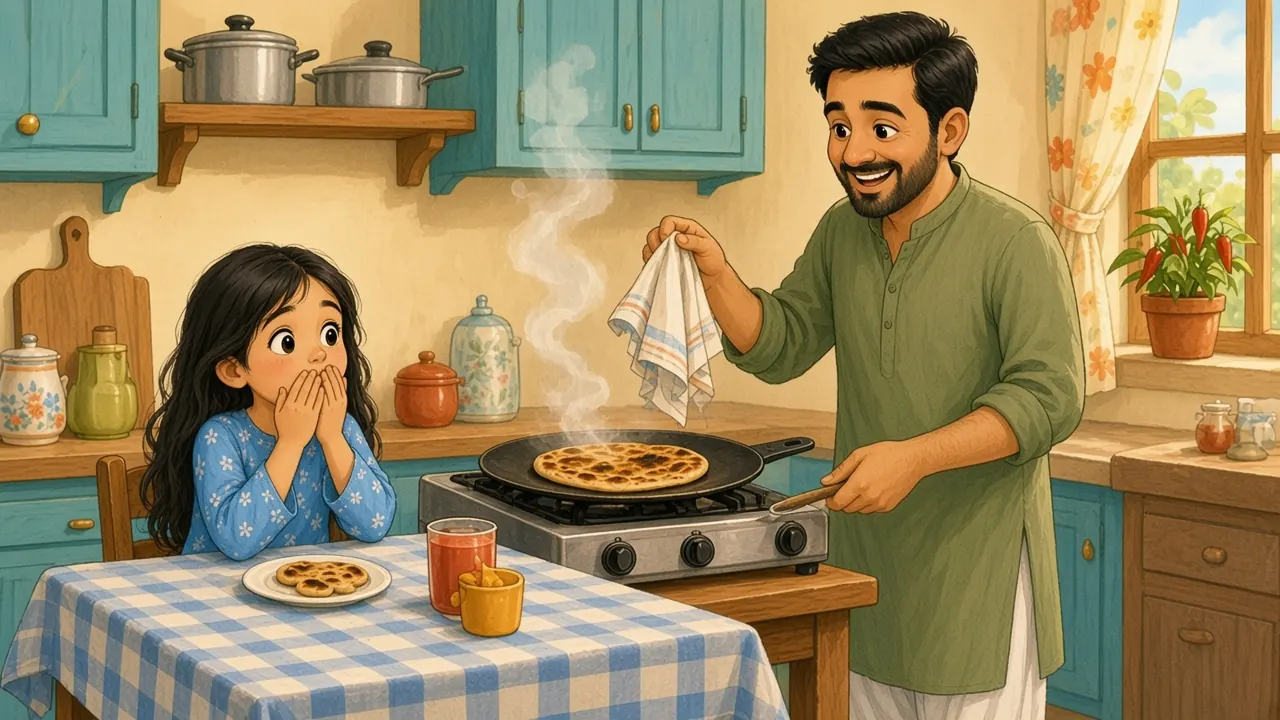
Abbu tried to make parathas. Smoke curled up from the pan.
The parathas came out lumpy and funny-shaped, with burnt spots all over.
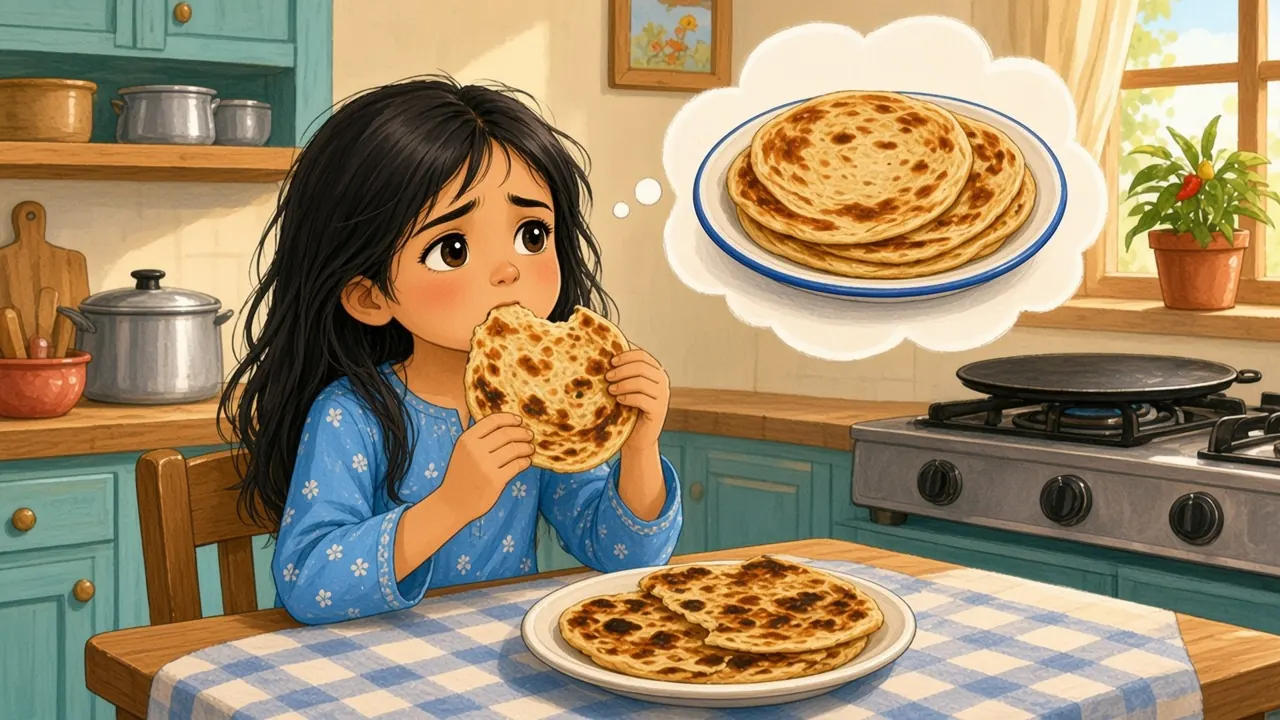
Sana took a bite. It was hard and bitter.
She thought of Ammi’s soft, warm parathas, and she missed them.
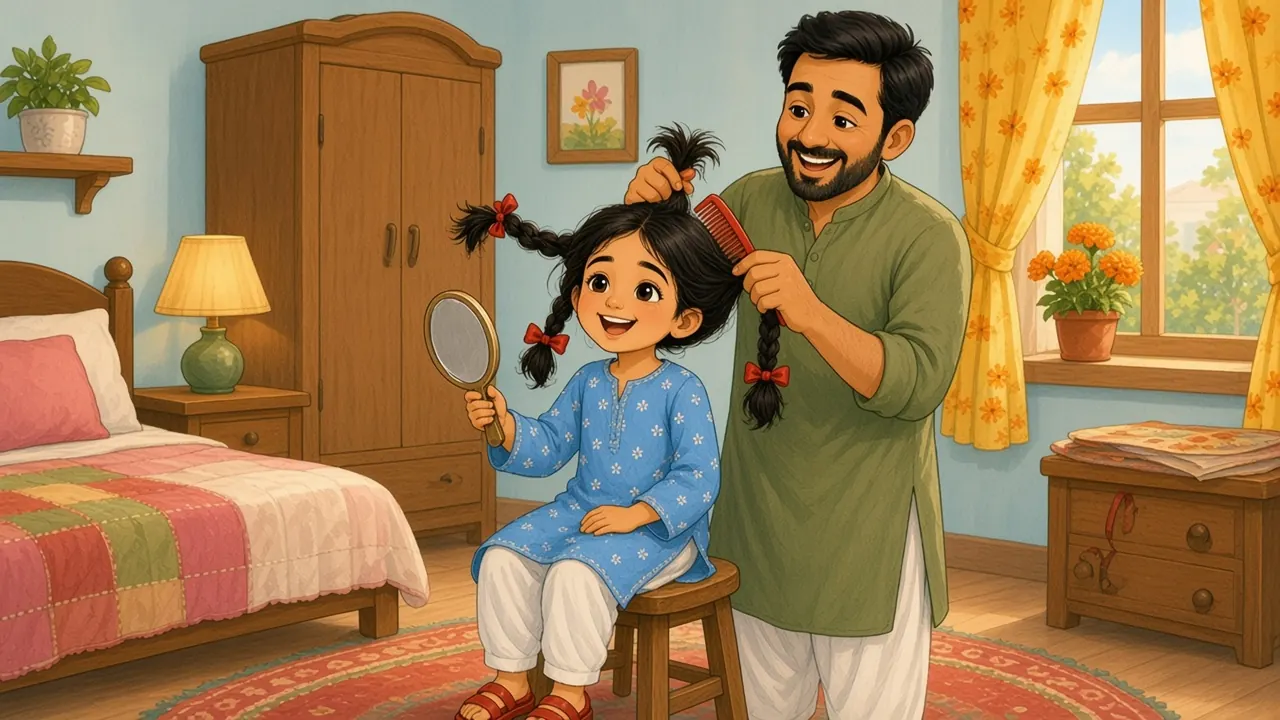
Then Abbu tried to plait Sana’s hair.
It came out in funny, sticking-out bunches, like a bird’s nest! They both laughed, and Abbu kept combing, but Sana missed Ammi’s gentle hands.
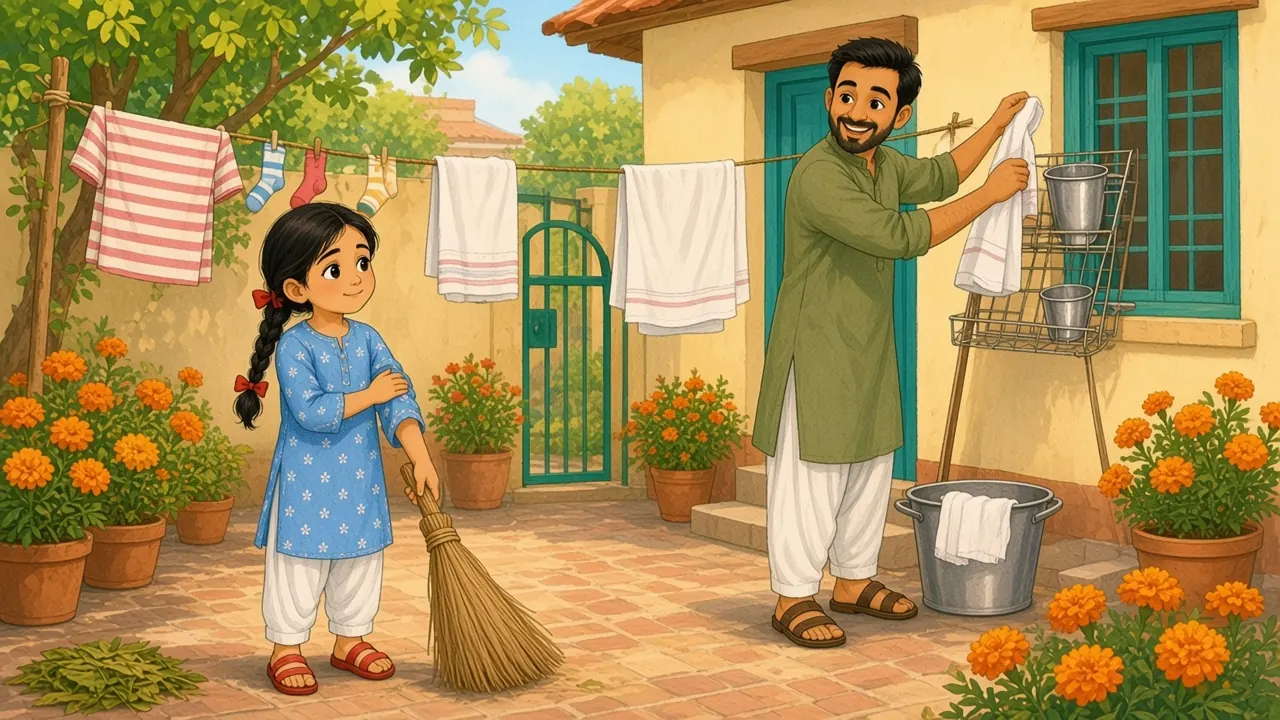
All day, Sana and Abbu washed dishes, swept the courtyard and hung up the washing.
By evening, Sana’s arms ached. “Ammi does this every day,” she whispered, “and I never say thank you.”
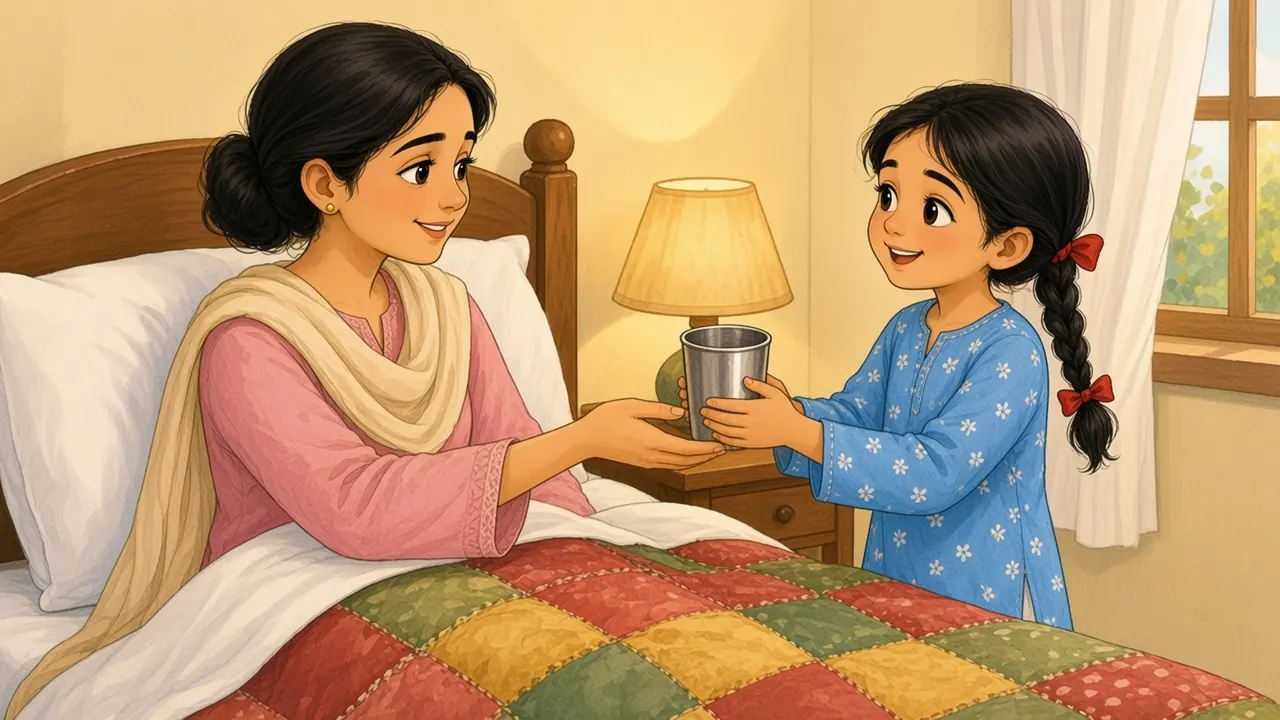
Sana carried a glass of water to Ammi’s bed.
“Thank you, my darling,” Ammi said softly. Those words made Sana feel warm inside.
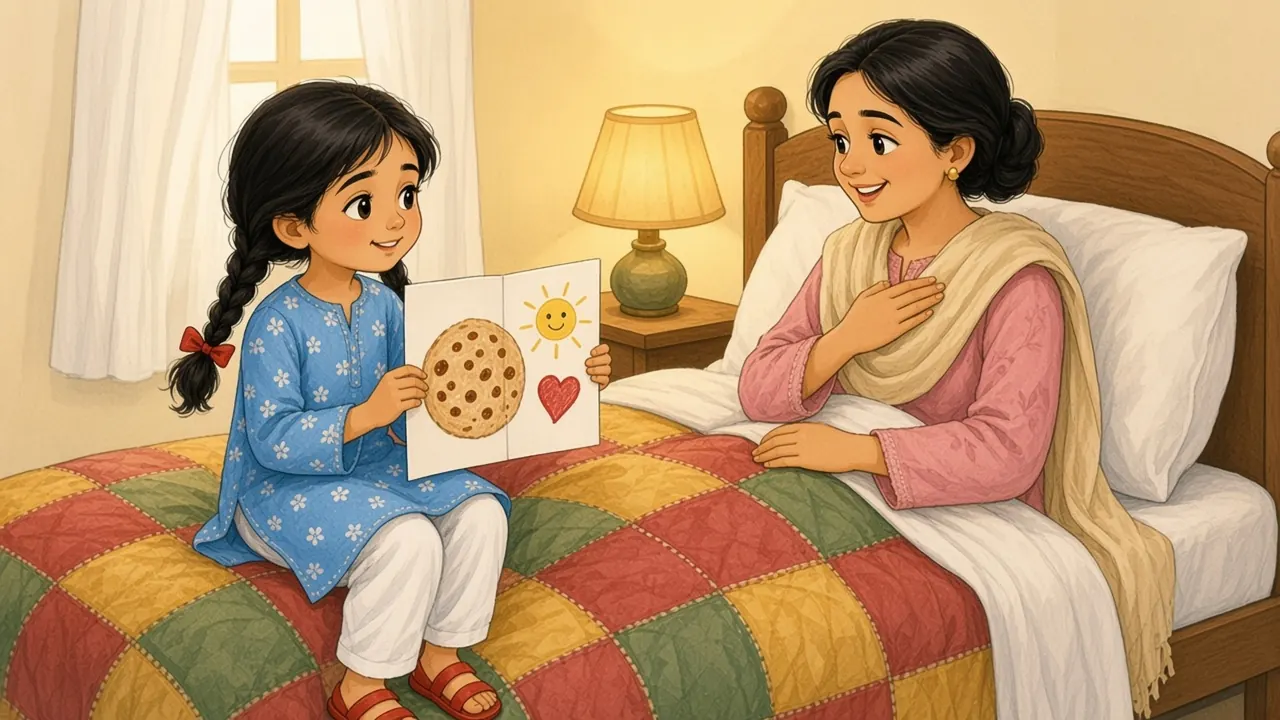
Then Sana drew a card for Ammi: a round paratha, a smiling sun and a red heart.
“Thank you for every paratha,” she said, “and my uniform, and my plaits, and everything.”
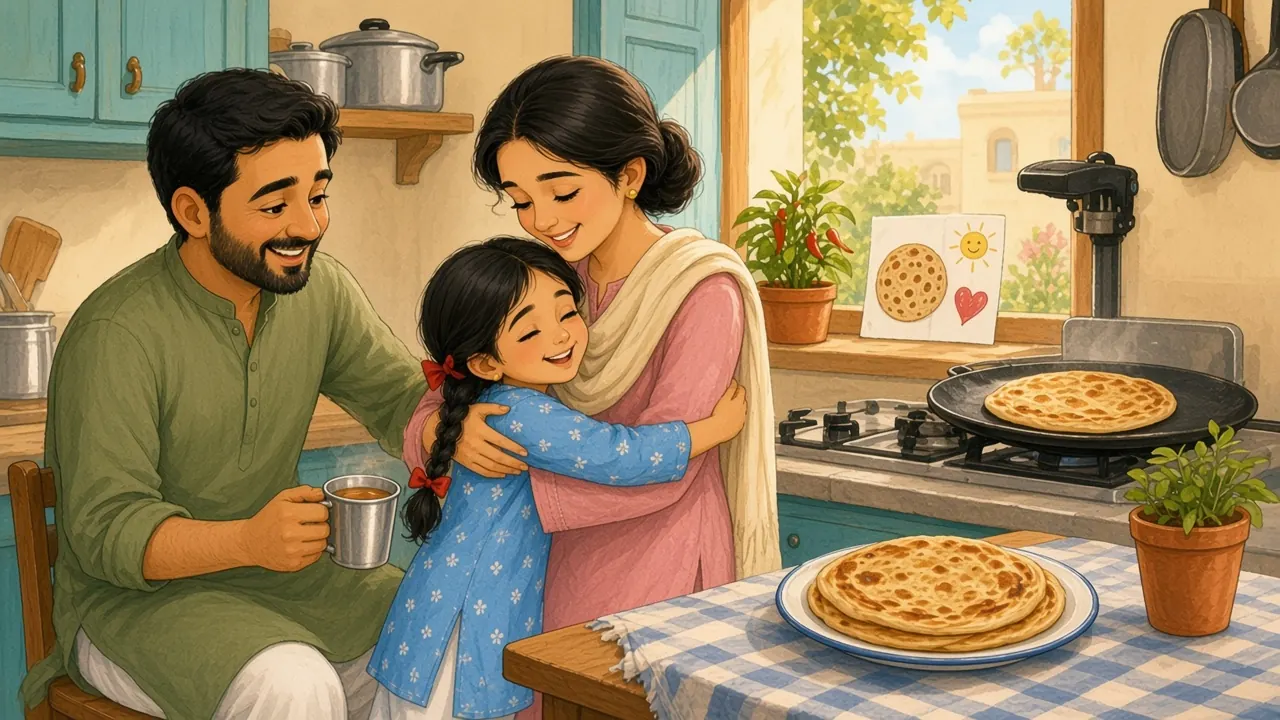
Next morning, Ammi felt better, and soft, round parathas sizzled again.
Sana hugged her tight. “Thank you, Ammi! And thank you, Abbu, for trying!” Abbu laughed.
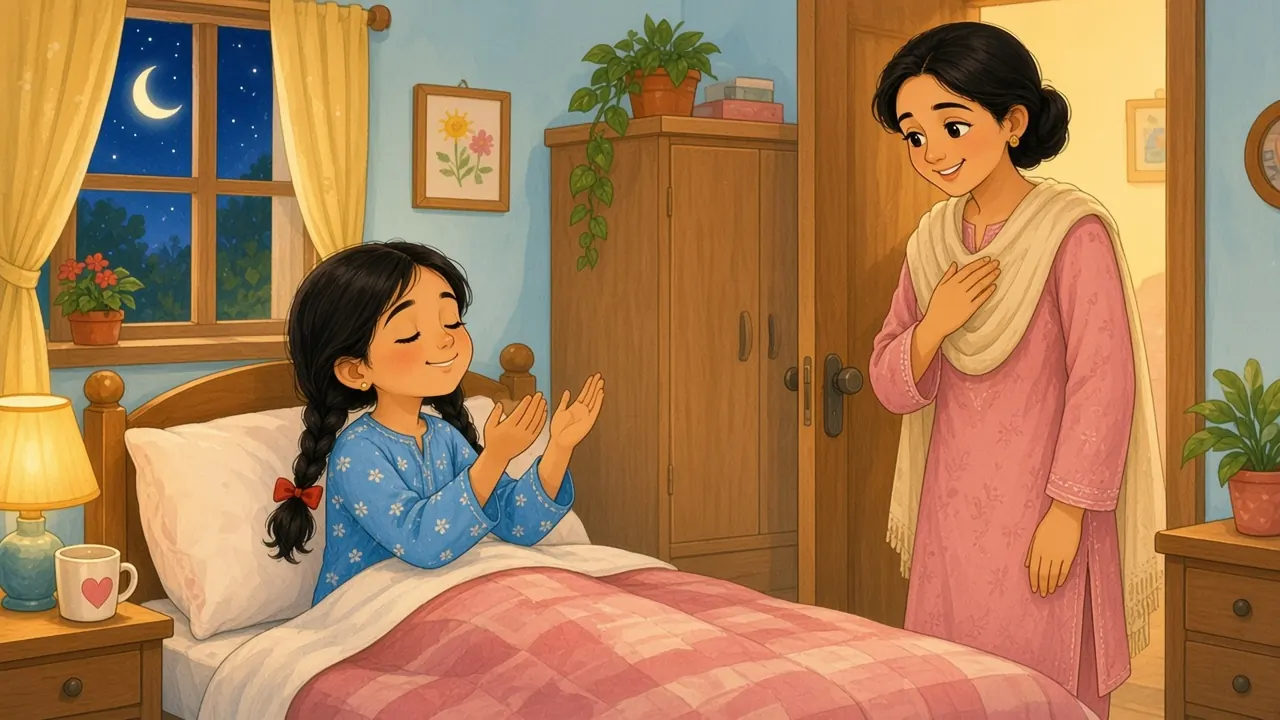
That night, Sana raised her hands and whispered, “Alhamdulillah.”
She thanked Allah for Ammi getting better, for warm parathas, and even for Abbu’s wobbly plait.
The Lesson
It is easy to notice what we don’t have, and forget what we do. Gratitude means noticing everyday blessings and saying thank you for them.
An Islamic lesson: Allah says in the Qur’an: “If you are grateful, I will surely increase you [in favor].” (Surah Ibrahim 14:7, Sahih International)
The Prophet Muhammad (peace be upon him) said: “He who does not thank the people is not thankful to Allah.” (Sunan Abi Dawud 4811; also Jami‘ at-Tirmidhi 1954)
Notice the everyday blessings around you, and say thank you for them.
Questions to Think About
Why did Sana grumble so much?
What did Sana learn on the day Ammi rested?
Who helps you every day? How can you thank them?
Conclusion
Now, when Ammi brings breakfast, Sana smiles and says, “Paratha again? Yes, please! Thank you, Ammi!”
Thank-yous are small words, but they make hearts big.
The End
Turn the page with the buttons, the ← → arrow keys, or by swiping.
Download it free
Free to download, read, print and share. No sign-up.
Listen
Jump to a part
- 0:00 Title
- 0:07 Before You Read
- 0:22 Story, part 1
- 0:36 Story, part 2
- 0:48 Story, part 3
- 0:58 Story, part 4
- 1:08 Story, part 5
- 1:20 Story, part 6
- 1:30 Story, part 7
- 1:44 Story, part 8
- 1:59 Story, part 9
- 2:10 Story, part 10
- 2:24 Story, part 11
- 2:38 Story, part 12
- 2:52 The Lesson
- 3:21 Questions to Think About
- 3:33 Conclusion
The whole book, 3 min 50 s, read by a computer voice, not a human narrator.
About the story
Every morning Ammi makes soft, round parathas, and every morning Sana grumbles: “Paratha again? Mahnoor gets jam sandwiches!” Then one Sunday Ammi has a fever and must rest. Abbu’s parathas come out lumpy and burnt, his plait looks like a bird’s nest, and by evening Sana’s arms ache from all the jobs Ammi does every day.
Notice the everyday blessings around you, and say thank you for them.
Book details and how it was made
- Age range
- Ages 5–8
- Formats
- PDF picture book (29 pages), MP3 audio narration (3:50)
- Language
- English
- Story and text
- Story drafted with AI writing tools, then edited by hand.
- Illustrations
- All illustrations made with an AI image tool.
- Narration
- The narration is read by a computer voice (Piper text-to-speech, “Cori” en_GB-cori-high by Bryce Beattie, public domain), not a human narrator.
We disclose AI use on every book.