The Stone That Grew Heavy
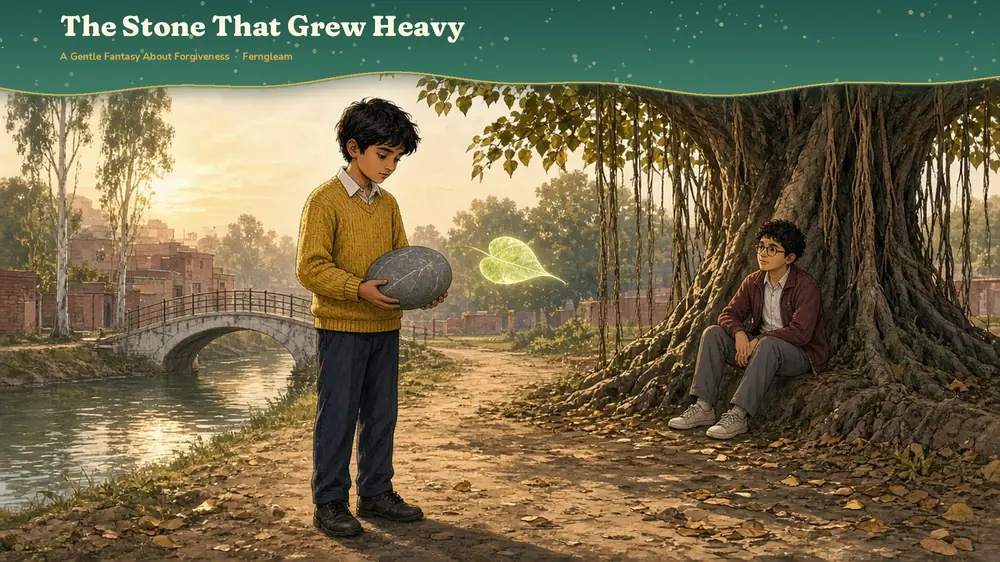
The Stone That Grew Heavy
A Gentle Fantasy About Forgiveness
Ferngleam · First free edition, October 2026
This book is free. You are welcome to download, read, print and share it, unchanged and free of charge. Please don’t sell it.
The story text, the illustrations and the audio narration were made with AI tools, then edited and checked for this edition.
Read by a computer voice: Piper text-to-speech, “Cori” voice (en_GB-cori-high) by Bryce Beattie, public domain.
Before You Read
This is a story about a boy, a stone that grows each time he remembers a hurt, and a grandmother who knows that stone well.
As you read, watch when the stone grows, and when it changes.
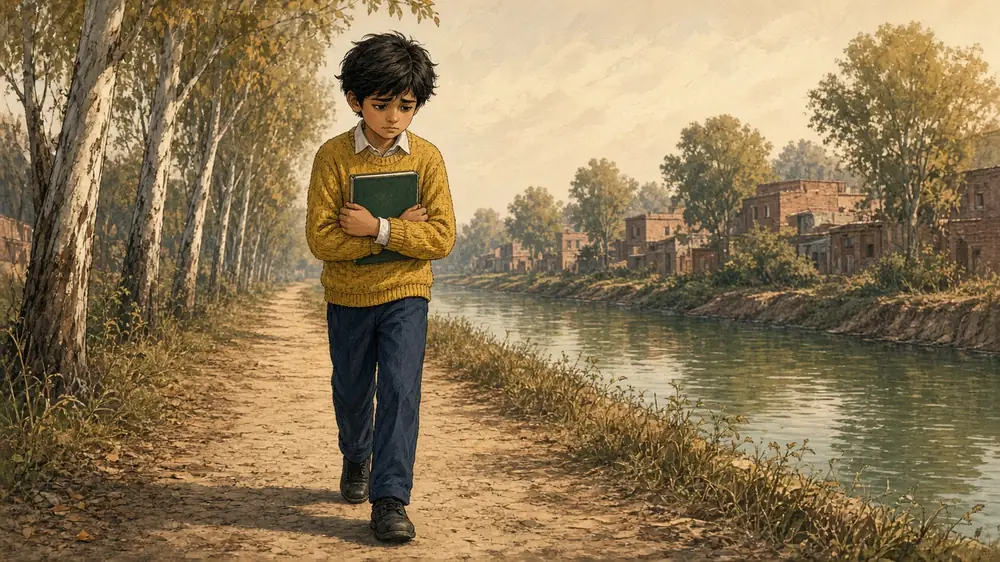
Hamza walked home by the canal alone, hugging his sketchbook.
That morning Omar had shown it to the class, and everyone laughed at his flying boy.
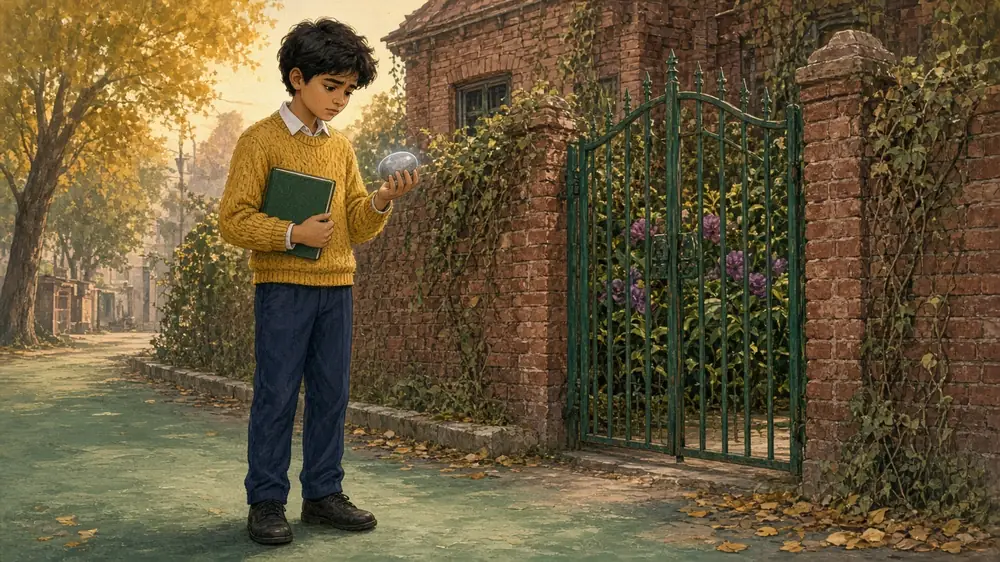
At his green gate, Hamza found something cold in his pocket.
He lifted out a smooth grey stone, small as a walnut, with a faint cool shimmer. It had not been there before.
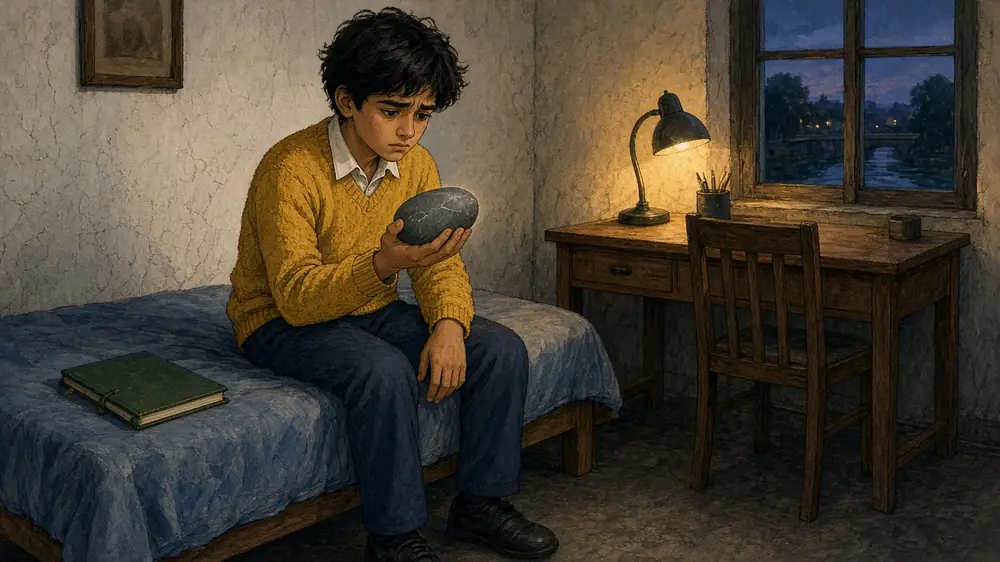
Each time he remembered the laughter, the stone grew.
By evening it filled his whole hand, cold and heavy as a closed door.
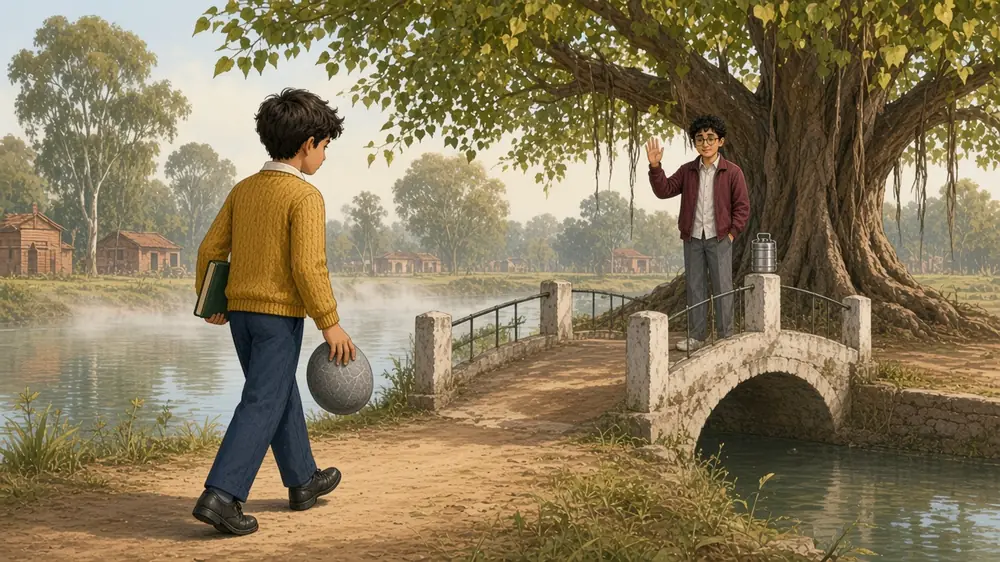
Next day, Omar waved from the footbridge, his steel tiffin on the post beside him, where they always ate lunch.
Hamza turned away, the stone in his hand. It dragged at him with every step.
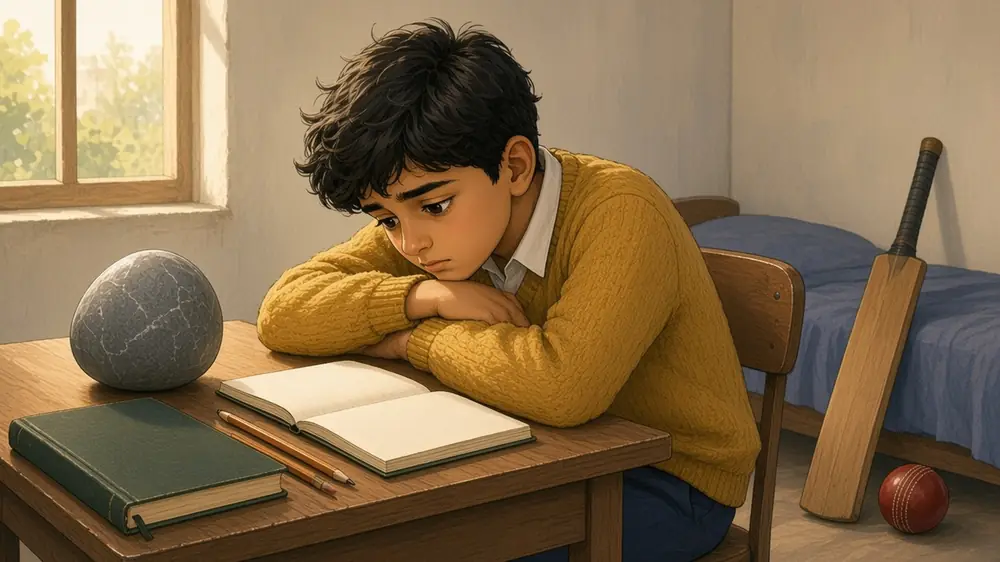
For three days he carried it.
His cricket bat stood unused. His sketchbook stayed blank. Even his pencils felt too heavy.
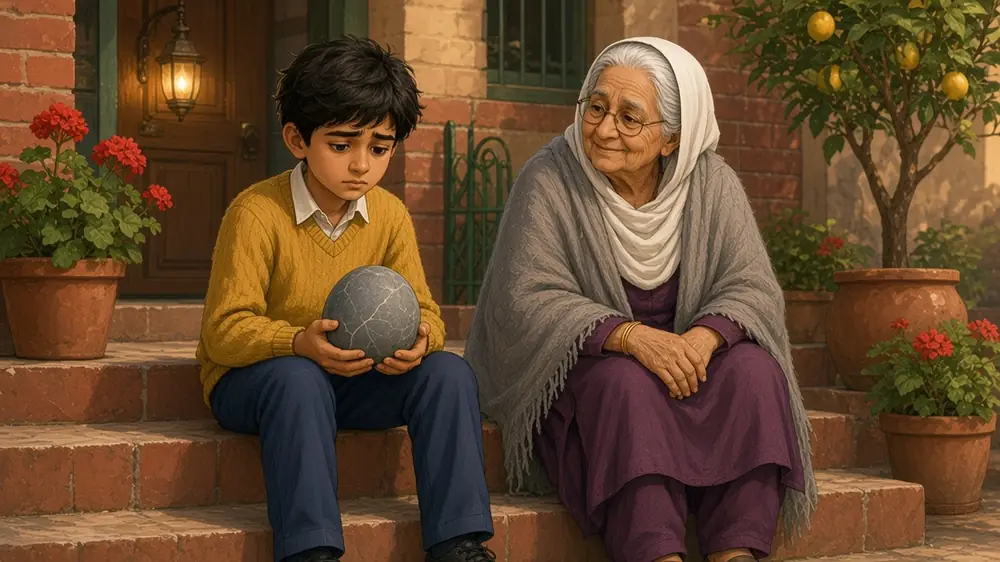
Nani found him on the courtyard steps, holding the stone in both hands now.
She sat beside him. “I know that stone,” she said softly. “I carried one too.”
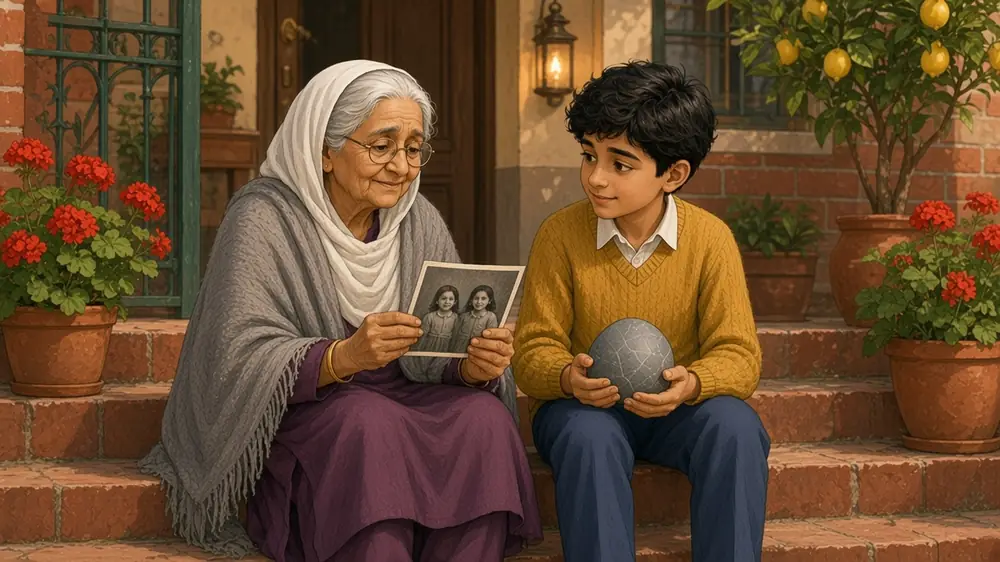
“Long ago, my sister broke a promise to me,” Nani said, touching an old photograph.
“I was right to be hurt. But I held on so long, we have not spoken in forty years.”
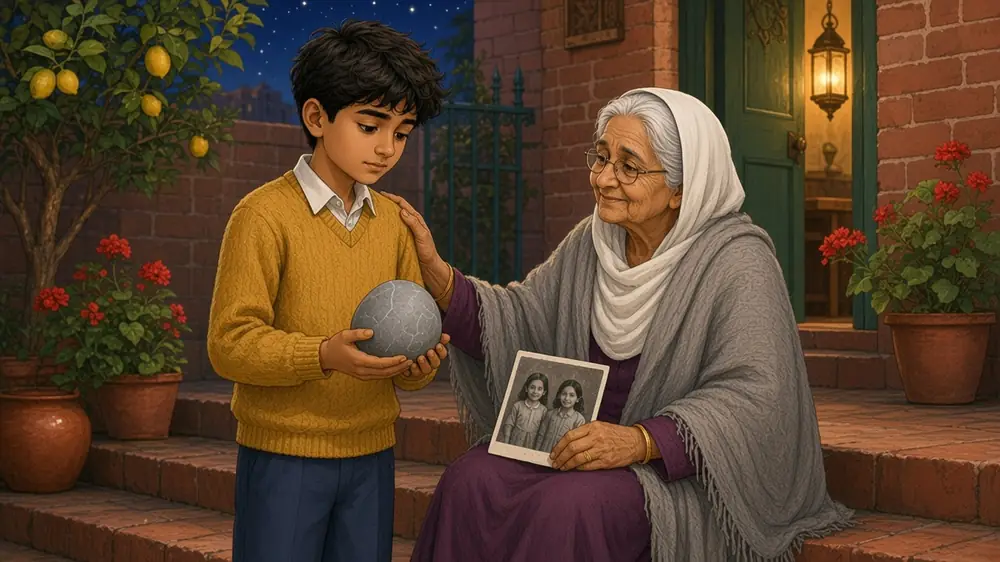
“Forgiving doesn’t mean it didn’t hurt,” Nani said. “It means you stop carrying the hurt everywhere.”
Hamza looked at the stone for a long time.
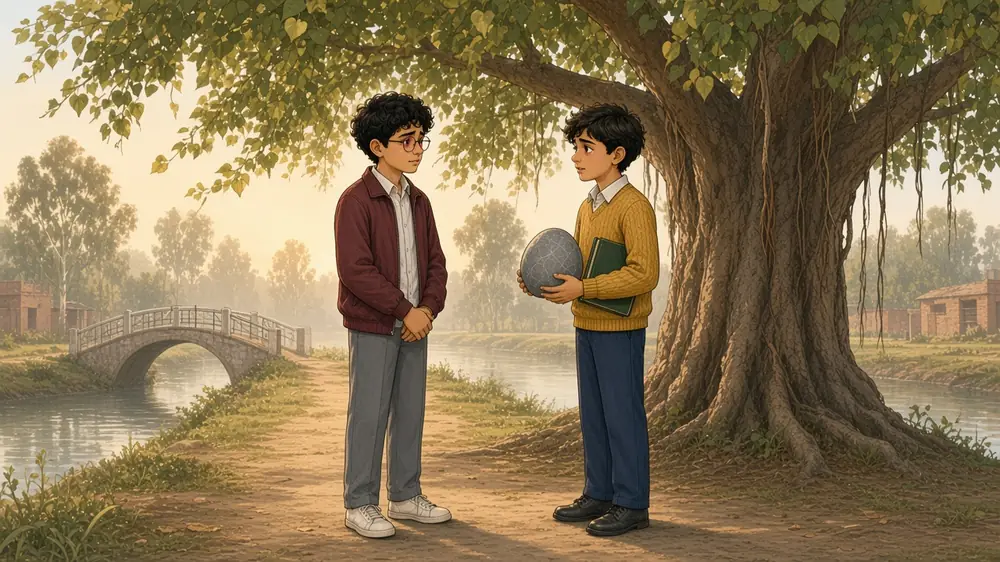
In the morning, Omar was waiting under the peepal tree, hands clasped.
“I’m sorry,” he said. “I wanted them to laugh with me. I didn’t think about you.”
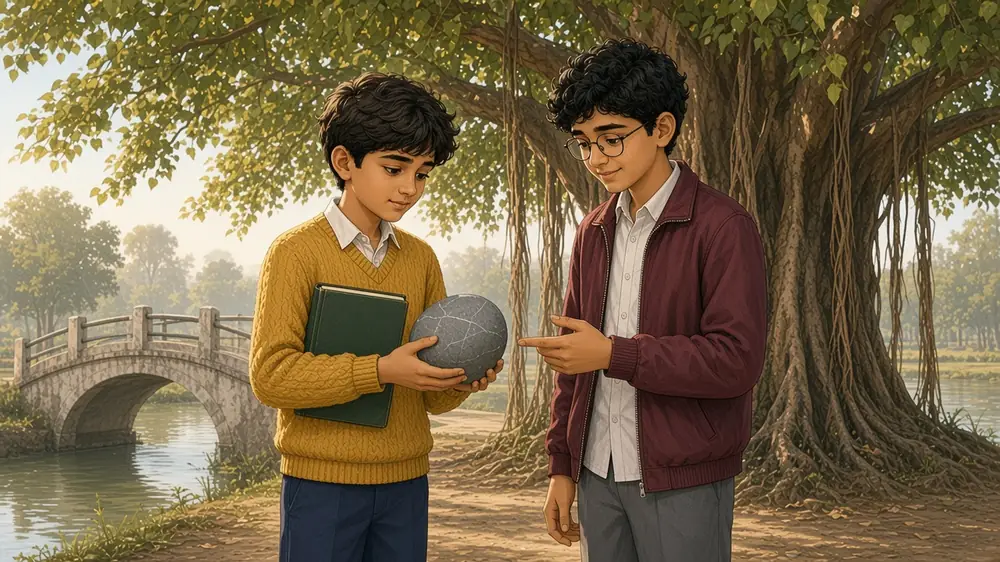
Omar pointed gently at the sketchbook. “Will you show me the flying boy again? Properly, this time?”
Hamza felt the stone’s weight and thought of Nani, still carrying hers.
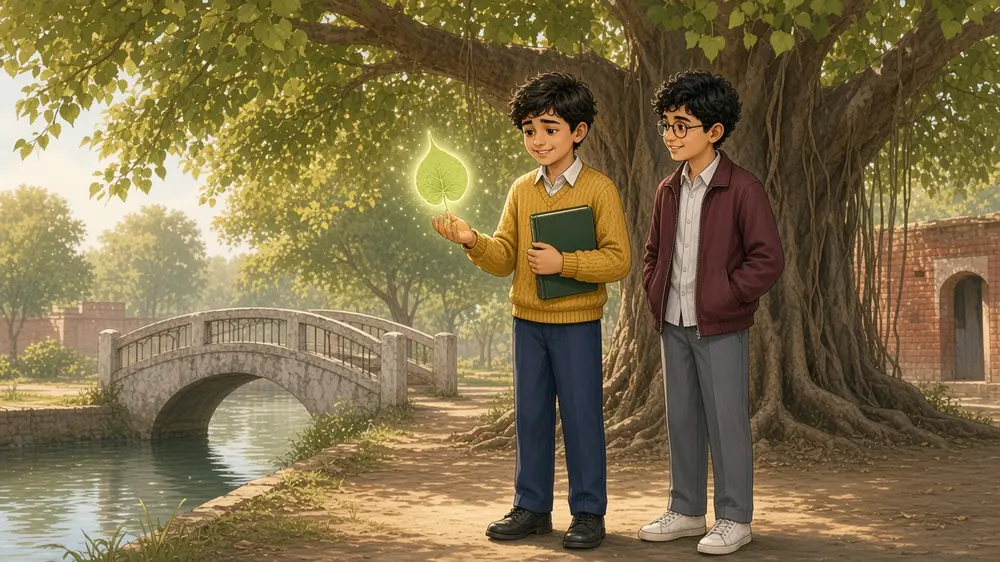
“It still hurts,” Hamza said. “But I forgive you.”
At once the stone grew light as a breath, and turned into a pale green peepal leaf that glowed in his palm. Omar smiled, hands in his pockets.
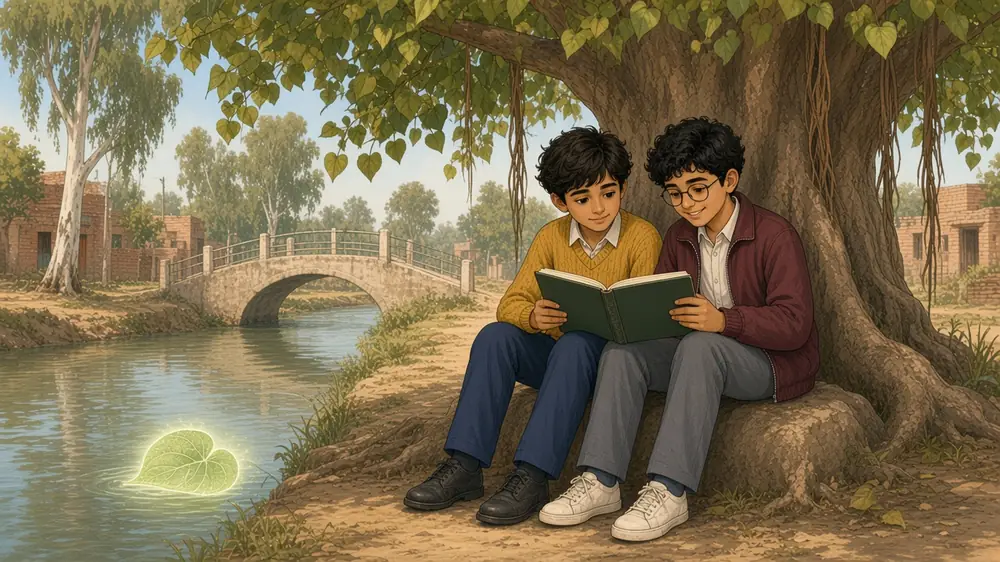
Hamza let the leaf float away down the shining canal.
Then the two boys sat on a root of the old peepal tree, heads bent together over the open sketchbook and the flying boy.
The Lesson
When someone hurts us, the hurt is real. But holding on to anger is like carrying a stone: it grows heavier each time we replay the moment.
Forgiving isn’t pretending nothing happened, or letting someone hurt you again. It is putting the stone down, so your hands are free.
Anger grows heavier the longer we carry it; forgiveness sets our own hands free.
Questions to Think About
Why did the stone grow each time Hamza remembered?
What made Omar’s apology feel real?
Are you carrying a stone? What would help you put it down?
Conclusion
That evening, Nani picked up her old phone and called her sister.
Some stones take three days to put down; some take forty years. All can be put down.
The End
Turn the page with the buttons, the ← → arrow keys, or by swiping.
Download it free
Free to download, read, print and share. No sign-up.
Listen
Jump to a part
- 0:00 Title
- 0:08 Before You Read
- 0:24 Story, part 1
- 0:35 Story, part 2
- 0:48 Story, part 3
- 0:58 Story, part 4
- 1:13 Story, part 5
- 1:23 Story, part 6
- 1:36 Story, part 7
- 1:49 Story, part 8
- 2:00 Story, part 9
- 2:11 Story, part 10
- 2:26 Story, part 11
- 2:41 Story, part 12
- 2:54 The Lesson
- 3:13 Questions to Think About
- 3:27 Conclusion
The whole book, 3 min 43 s, read by a computer voice, not a human narrator.
About the story
Hamza’s best friend Omar shows his private sketchbook to the whole class, and everyone laughs at his flying boy. On the way home a small grey stone appears in Hamza’s pocket, and it grows every time he remembers. Only Nani recognises it: she has carried one of her own for forty years.
Anger grows heavier the longer we carry it; forgiveness sets our own hands free.
Book details and how it was made
- Age range
- Ages 10–14
- Formats
- PDF picture book (29 pages), MP3 audio narration (3:43)
- Language
- English
- Story and text
- Story drafted with AI writing tools, then edited by hand.
- Illustrations
- All illustrations made with an AI image tool.
- Narration
- The narration is read by a computer voice (Piper text-to-speech, “Cori” en_GB-cori-high by Bryce Beattie, public domain), not a human narrator.
We disclose AI use on every book.